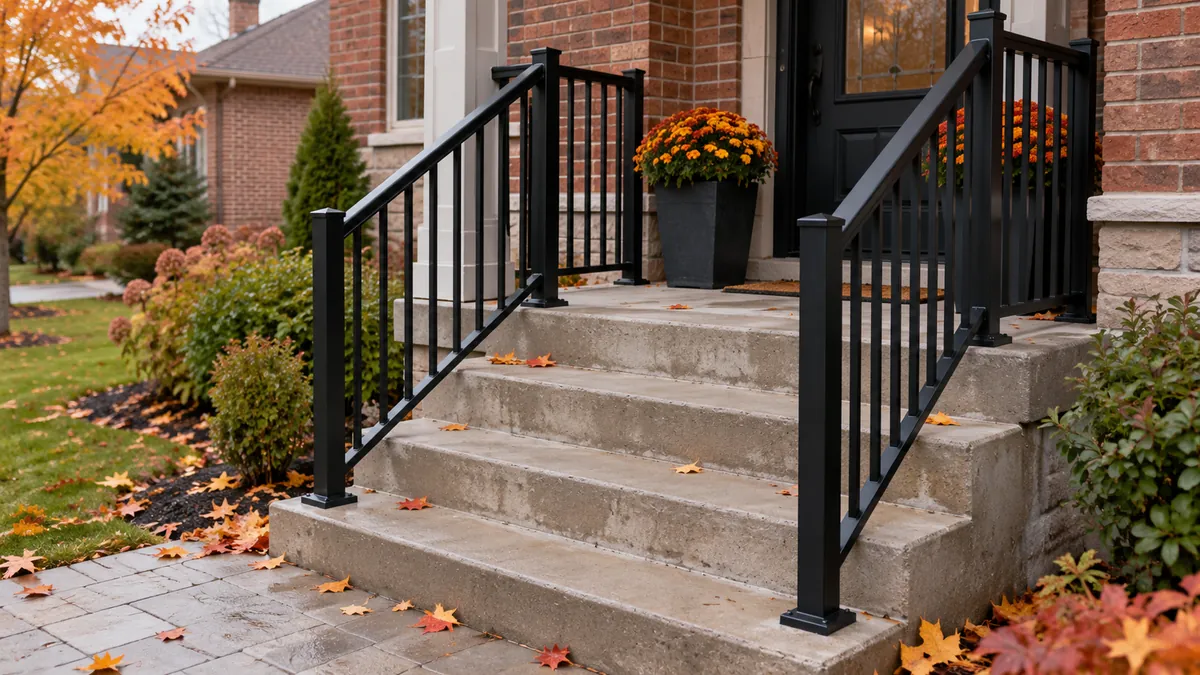
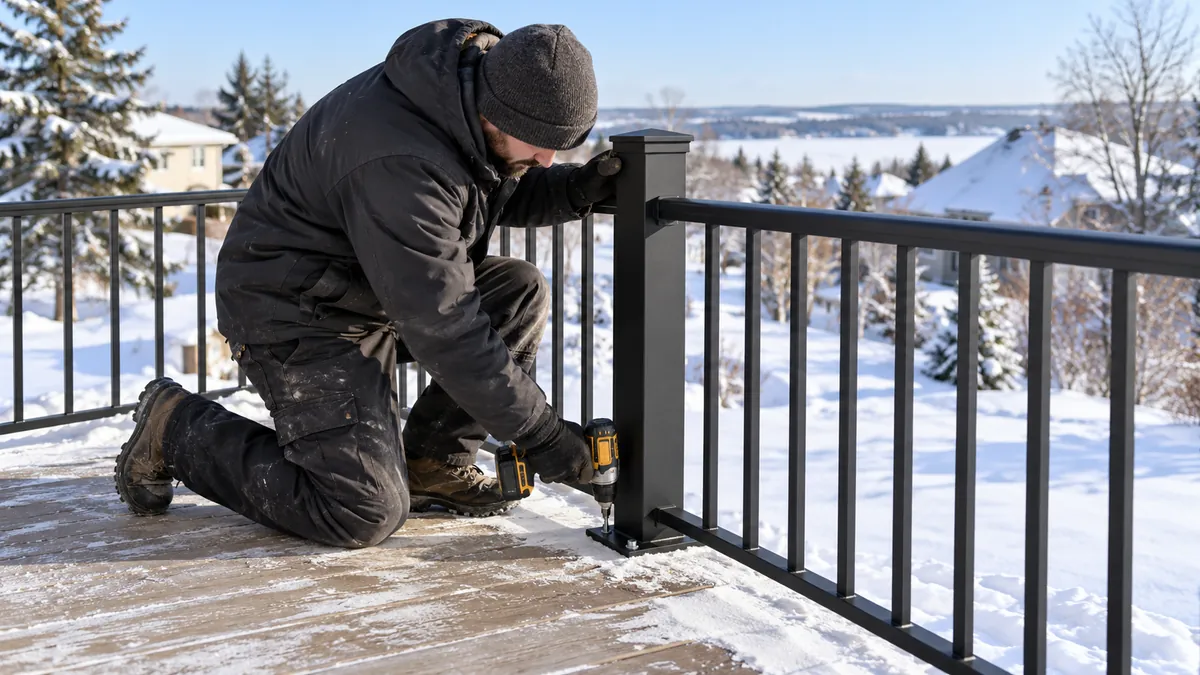
Railing installation in winter is possible in Ontario, but not every project suits the cold months. A railing that bolts onto sound, existing concrete or a solid wood deck can often go in on a dry winter day. Work that involves fresh concrete, grout or masonry repairs is a different story once temperatures drop below freezing.
If the fall schedule slipped away and you are weighing railing installation in winter, or you want your new railing ready for spring, this guide explains what changes in the cold, which jobs work well, and how to use the winter months to plan. It applies to aluminum deck railing systems, both picket and glass, on homes and low-rise buildings across Toronto and the GTA.
Can You Do Railing Installation in Winter?
Yes, in many cases. The railing itself is rarely the problem. Aluminum handles cold weather well, and powder-coated components arrive ready to install with no painting or staining on site.
What limits railing installation in winter is everything around the railing: the surface it mounts to, the anchors or grout that hold it, the snow and ice on the deck, and the daylight available to work safely. When those are under control, winter work can go smoothly.
Can aluminum railings be installed in cold weather?
Yes. Aluminum railings in cold weather can be installed as long as the mounting surface is sound, clear of snow and ice, and the anchoring method is suitable for the temperature. Mechanical anchors into existing concrete and screws into solid wood framing are generally the most winter-friendly methods.
Components should be stored where they will not be buried in snow or scratched on frozen ground. Like any metal, aluminum expands and contracts with temperature, so posts and sections should be fitted and checked again once the weather warms.
How cold is too cold to install a railing?
There is no single cut-off temperature for a bolted aluminum railing. The limits come from the materials and conditions around it: cold-weather concrete rules below 5°C, the minimum temperatures listed for adhesives and sealants, and safe working conditions for the crew.
In practice, railing installation in winter is planned around the forecast. A dry, calm day just below freezing is very different from a day of freezing rain or strong wind chill, and a good installer will reschedule rather than force railing installation in winter on a day that compromises the result.
What Changes When Temperatures Drop
Cold affects materials and people. Here is what to plan around for railing installation in winter, whether the railing mounts to concrete or wood.
Fresh concrete and grout
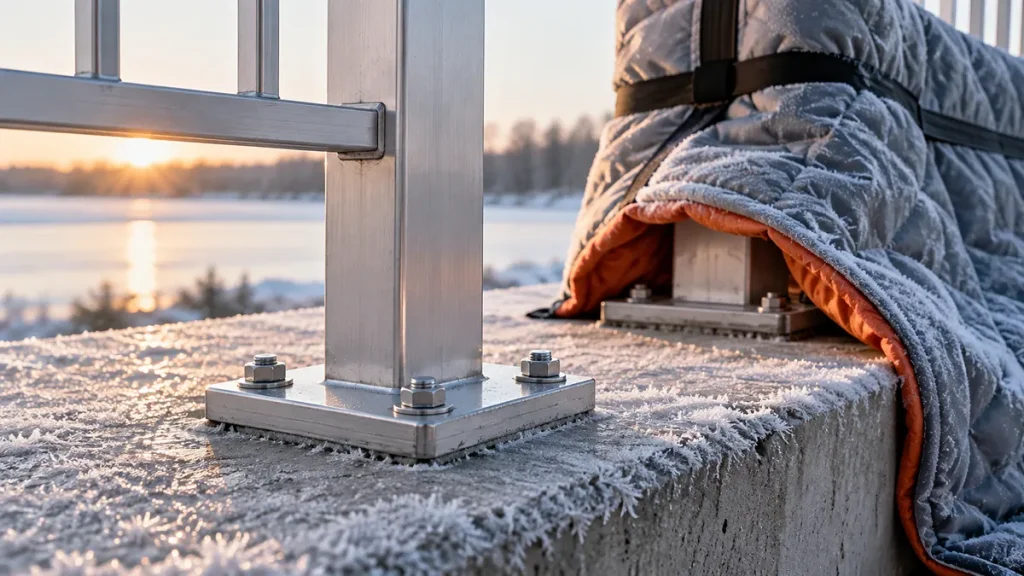
The Ontario Building Code has specific cold-weather rules for concrete. The City of Brampton’s cold weather construction bulletin quotes the requirement: when the air temperature is below 5°C, concrete must be kept between 10°C and 25°C while it is mixed and placed, then maintained at 10°C or more for 72 hours.
For railing installation in winter, that means new footings, slab repairs or grouted core-drilled posts need heating, insulated covers or a warmer day. The same bulletin notes that mortar and masonry must stay at 5°C or more during installation and for at least 48 hours afterwards, which matters if a brick or stone wall needs repair before a handrail goes on.
Adhesive anchors and sealants
Many adhesive (epoxy-type) anchors have a minimum installation temperature and cure much more slowly in the cold. Sealants used around base plates and wall penetrations behave the same way. Always check the product data sheet, and plan for longer cure times before loading the railing.
Wood and composite decks
A winter deck railing goes into the same framing as a summer one, so the blocking under each post must be solid and dry enough to hold fasteners. Wet or frozen lumber can split more easily near the edges, and ice in old fastener holes hides damage.
Some composite decking is less forgiving when drilled in deep cold. Follow the decking manufacturer’s guidance, and make sure posts are fastened into the structure below the boards rather than into the decking alone.
Snow, ice and short days
A deck or balcony must be cleared and dry where posts will sit. Ice under a base plate or inside a drilled hole affects the fit and the anchor. Shorter days also mean less working time, so a job that takes one day in June may need two in January.
Which Projects Suit Railing Installation in Winter
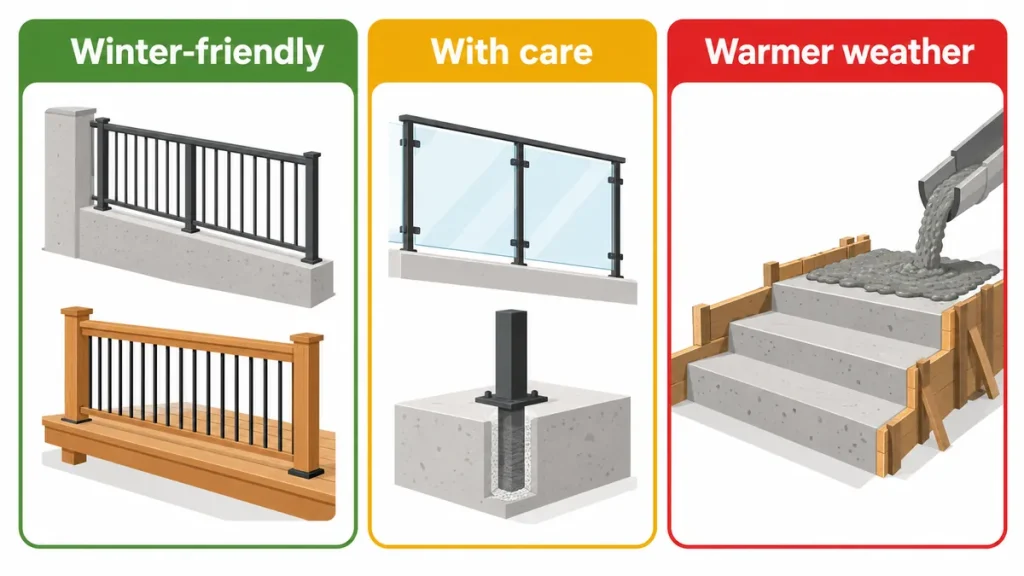
Some projects are well suited to railing installation in winter, while others are better left until spring. The table below gives a general guide.
| Project type | Winter suitability | What to watch |
|---|---|---|
| Replacing a railing on an existing concrete balcony or porch | Usually good | Concrete condition, anchor type, clearing snow and ice |
| New railing on a solid wood or composite deck | Usually good | Dry framing, blocking under posts, icy deck boards |
| Glass panel railings | Possible with care | Wind, safe handling of panels, glazing gaskets in the cold |
| Core-drilled and grouted posts | Needs cold-weather measures | Grout temperature and cure time |
| New concrete steps, slabs or footings | Best left for warmer weather unless heated and protected | Ontario Building Code cold-weather concrete rules |
Condo and multi-unit projects add another layer to railing installation in winter. Building management may limit access, noise or work hours in winter, so confirm the schedule early.
Questions to Ask Before Booking Railing Installation in Winter
If you plan to install railings in winter, ask the installer how the job will handle the cold before you sign. Clear answers to these questions are a good sign that the crew has done winter work before.
- What anchors or fasteners will you use, and what is their minimum installation temperature?
- Does any part of the job involve concrete, grout or masonry, and how will it be kept warm?
- Who clears snow and ice from the work area, and is that included in the price?
- Will the old railing be removed and the new one installed on the same day?
- What happens if a cold snap or storm arrives on the scheduled day?
- Will someone return in spring to check posts and fasteners?
Our guide to comparing railing quotes lists more questions that help you line up proposals side by side.
Use the Winter to Measure, Design and Order
Even when railing installation in winter is not practical for your project, the cold months are the best time to get everything else done. Spring is the busiest season for outdoor projects, so homeowners who plan in winter and book an early spring railing installation are often first in line once the weather turns.
Start with accurate site measurements. Our deck railing measurements guide explains what to record, from straight runs and corners to stair sections and gate openings.
For custom or larger projects, approved drawings come next. Our article on railing shop drawings explains what they show and why they matter before fabrication. If your project may need a permit, start that process in winter too, since municipal review times vary.
Is it cheaper to install railings in winter?
Not necessarily. Some contractors have more open dates in winter, but railing installation in cold weather can involve measures such as heating, extra labour time or snow removal, and those can add cost.
The real advantage is scheduling. Railing installation in winter, or planning in winter for an early spring install, avoids the rush that comes in May and June. Compare quotes on scope, not just price, and ask each contractor how winter conditions affect their plan.
Keep the Site Safe During Railing Installation in Winter
Removing an old railing leaves an open edge, and railing installation in winter makes that edge harder to see. On a raised deck, porch or balcony, that edge is a serious fall hazard, and snow can hide exactly where the deck ends.
Under the Ontario Building Code, guards are generally required where a walking surface is more than 600 mm above the adjacent surface, as the Town of Halton Hills’ deck permit guide explains. Coordinate removal and installation so the old guard comes off only when the new one is ready to go in, and block off the area if work stops overnight.
Keep paths to the work area shovelled and salted, and store components where they will not be buried. Glass panels in particular should be handled only in calm conditions.
Check a Winter-Installed Railing in Spring
After railing installation in winter, check the railing once temperatures rise. As the season changes, materials move and the ground under nearby steps can settle after the thaw.
- Check every post for movement and retighten fasteners as needed.
- Look at base plates and covers for gaps, salt residue or trapped water.
- Confirm that gates still latch and swing freely.
- Inspect sealant around base plates and wall connections.
- Rinse off winter salt and grime.
Our spring deck railing inspection checklist walks through each step. For the months in between, these tips to protect aluminum railings in winter help keep the finish in good shape.
Plan Your Railing Installation in Winter With AlumiguardMFG
Railing installation in winter works best when the mounting surface is sound, the anchoring method suits the cold, and the site stays safe from removal to final inspection. For projects that involve fresh concrete or masonry, winter is the ideal time to measure, approve drawings and order, then install as soon as conditions allow.
AlumiguardMFG manufactures aluminum picket, glass and decorative railing systems at our North York facility for homes and commercial projects across Toronto and the GTA. You can see how our posts and sections go together on our installation process page.
Share your project location, photos, rough measurements and the mounting surface, then contact AlumiguardMFG to plan your railing for this winter or early spring.