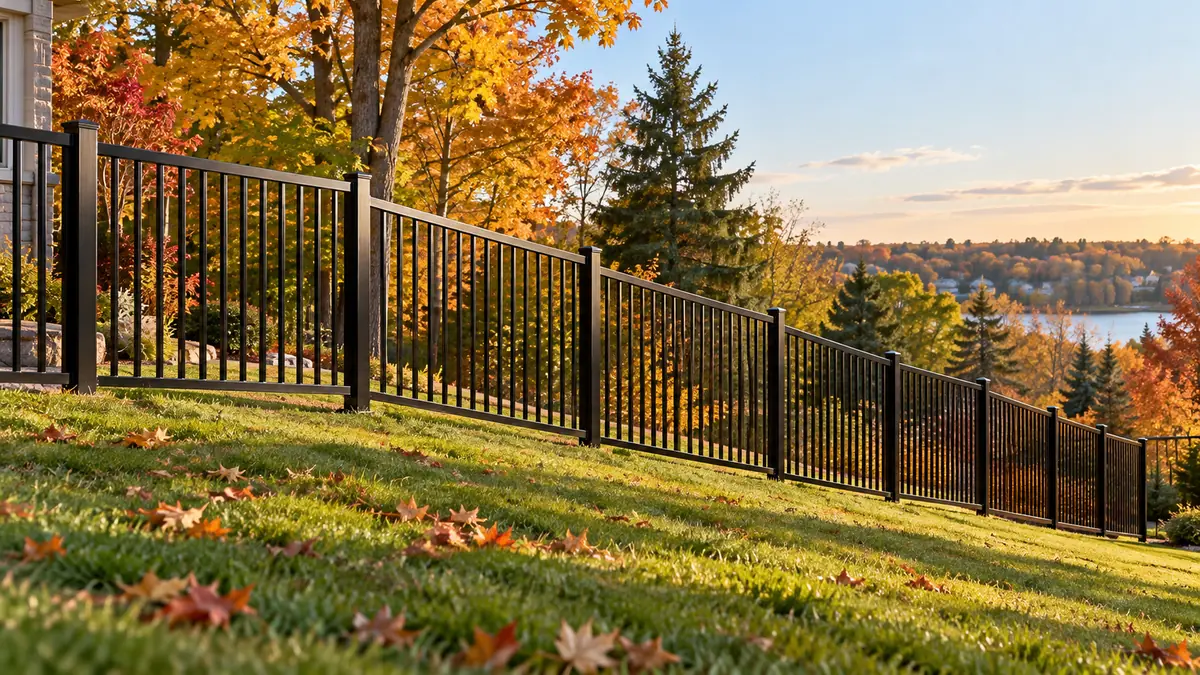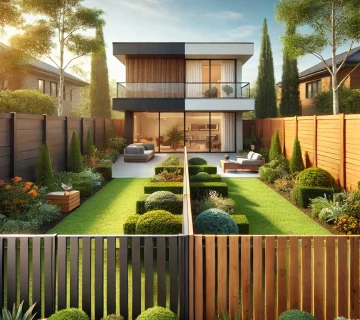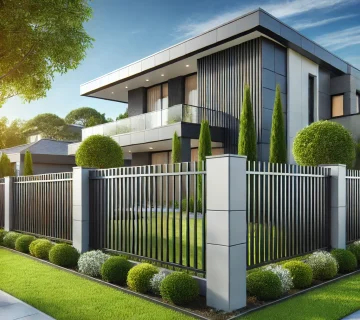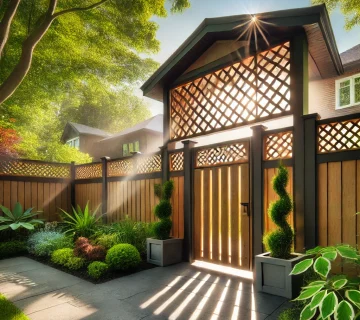
Aluminum fence gates get more use than any other part of a fence, so they are where planning mistakes show up first: a gate that drags on the walkway, sags after one winter or won’t latch in January. Getting the opening size, swing direction, posts and hardware right before anything is ordered avoids most of those problems.
This guide explains how to plan an aluminum fence and gates for homes and commercial sites in Ontario, from single walk gates to double drive gates and pool gates. It applies to the aluminum fence systems AlumiguardMFG manufactures for homeowners, contractors and builders across Toronto and the GTA.
Types of Aluminum Fence Gates
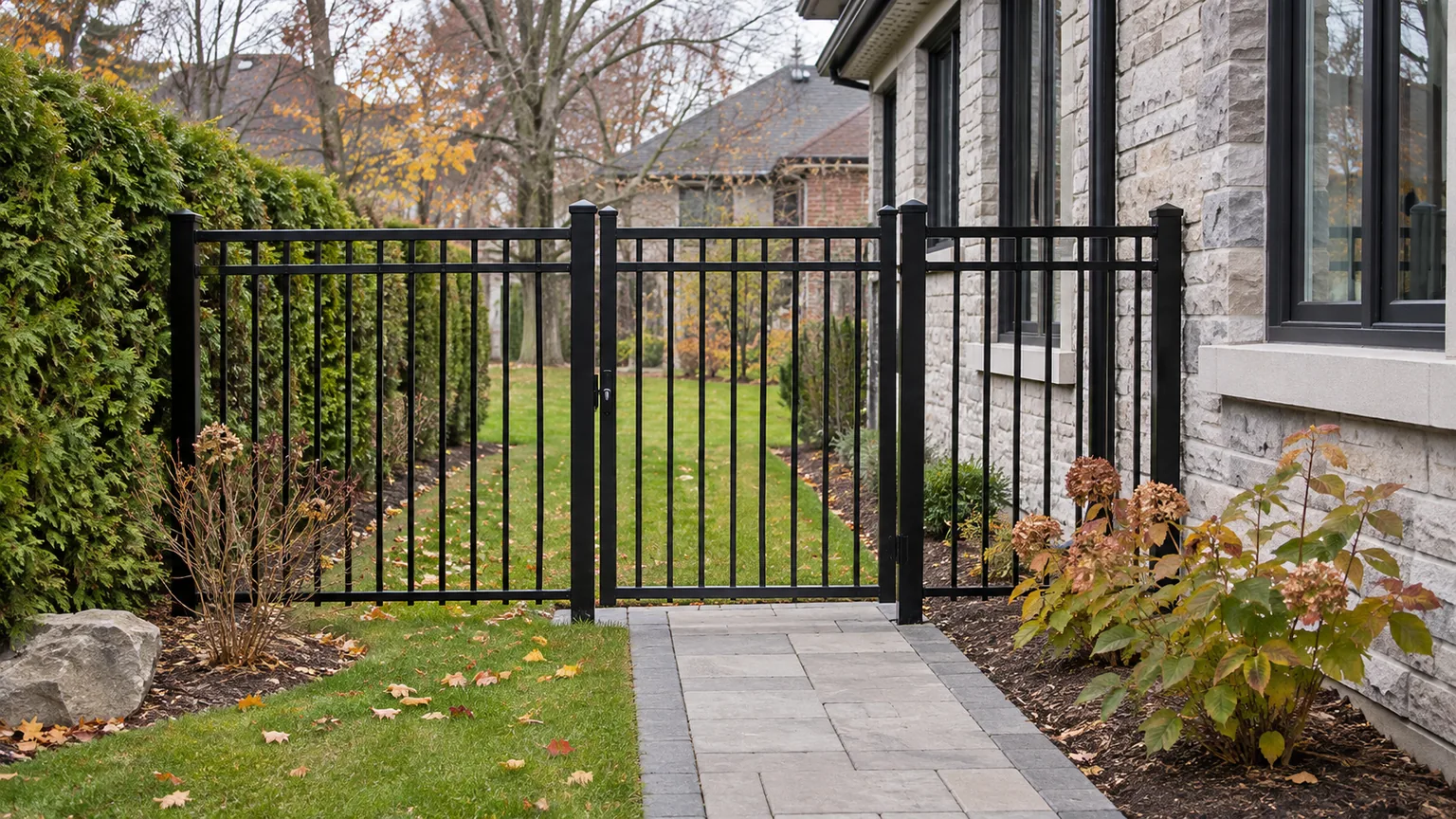
Gates are usually built to match the fence, with the same picket style, rails and powder-coated colour, so the gate reads as part of the run. The main decision is how many leaves the opening needs and what the gate has to do.
| Gate type | Common use | Planning notes |
|---|---|---|
| Single walk gate | Side yards, backyards, front walkways | Size it for bins, mowers and snow blowers, not just people |
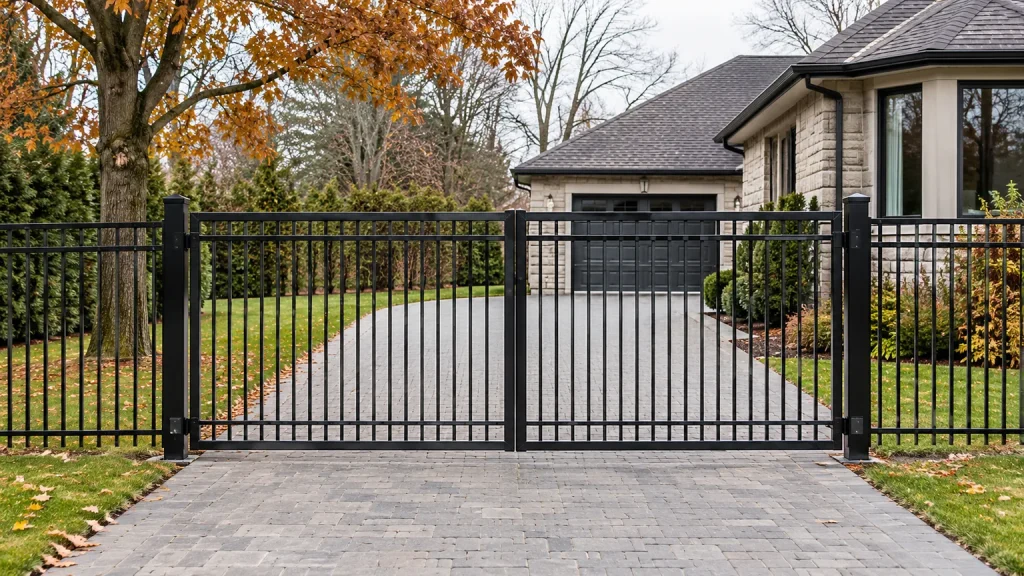
| Double drive gate | Driveways, vehicle and equipment access | Needs a drop rod and a receiver in the driveway for the fixed leaf |
| Pool gate | Openings in a pool enclosure | Self-closing, self-latching hardware and stricter construction rules |
| Commercial or multi-unit gate | Townhome complexes, amenity areas, commercial yards | Heavier use, so plan posts, hinges and locks for frequent cycles |
How Wide Should an Aluminum Fence Gate Be?
Start with what has to pass through the opening, not with a standard size. Think about:
- Garbage, recycling and green bins on collection day.
- A lawn mower, wheelbarrow or snow blower.
- Furniture, a barbecue or a hot tub cover being moved in or out.
- Landscaping or pool equipment for future projects.
That last point catches many owners. If a pool, patio or major landscaping job is likely in the next few years, a wider gate now can save cutting out a fence section later.
Measure the clear opening between finished posts, and remember that hinges and latch hardware take up part of it. Ask for both the gate leaf width and the post-to-post opening on your quote so there is no confusion.
When to use a double gate instead of one wide gate
A very wide single leaf puts a lot of leverage on its hinge post, which makes it more likely to sag over time. Splitting a wide opening into two leaves halves the width each post has to carry, and you can still open just one side for everyday foot traffic.
Swing Direction, Height and Placement
Where a gate sits and which way it swings matter as much as the gate itself.
- Swing into the property. This is the usual choice. Avoid gates that swing out over a public sidewalk or road, and check with your municipality if the fence sits near the lot line.
- Clear the swing path. Steps, planters, air-conditioning units and downspouts in the arc will stop the gate short.
- Plan for snow. A gate that swings toward the spot where shovelled snow, plow spray or roof run-off piles up will be frozen shut for half the winter. Look at where snow collects before choosing the swing.
- Sloped ground. A gate that swings uphill hits the grade partway through its arc. Our guide to an aluminum fence on a slope covers how to place gates on sloped lots.
A gate is part of the fence run, so plan it to the same height limit. In Toronto, Municipal Code Chapter 447 limits a front-yard fence to 1.2 metres within 2.4 metres of a lot line that abuts a public road, and to 2.0 metres elsewhere in the front yard. Height is measured from the average grade one metre on either side of the fence. The City’s fence bylaw page summarizes the rules, and other GTA municipalities set their own limits.
Gate Posts and Footings
The gate post does the hardest work in a fence. It carries the weight of the gate on its hinges and takes a twist every time the gate swings, slams or gets leaned on.
- Post size. Our fence system data sheet lists square aluminum posts in 2″ x 2″ and 3″ x 3″ sizes. Ask which size and footing suit your gate’s width before ordering.
- Footings and frost. Fence posts are set into the ground with concrete. A footing that is too shallow can be lifted unevenly by frost, which pushes the gate out of line so the latch no longer meets its keeper. Set gate posts to the depth your installation details or local building guidance call for.
- Cold-weather concrete. Fresh concrete needs protection from freezing while it cures. Our guide to railing installation in winter explains what changes when temperatures drop.
- Locates first. Before any post holes are dug, request a locate through Ontario One Call. It’s free, and it’s required by law before digging in Ontario.
Hinges, Latches and Hardware
Good hardware is what keeps an aluminum fence gate working year after year.
- Adjustable hinges let you correct small amounts of sag without removing the gate.
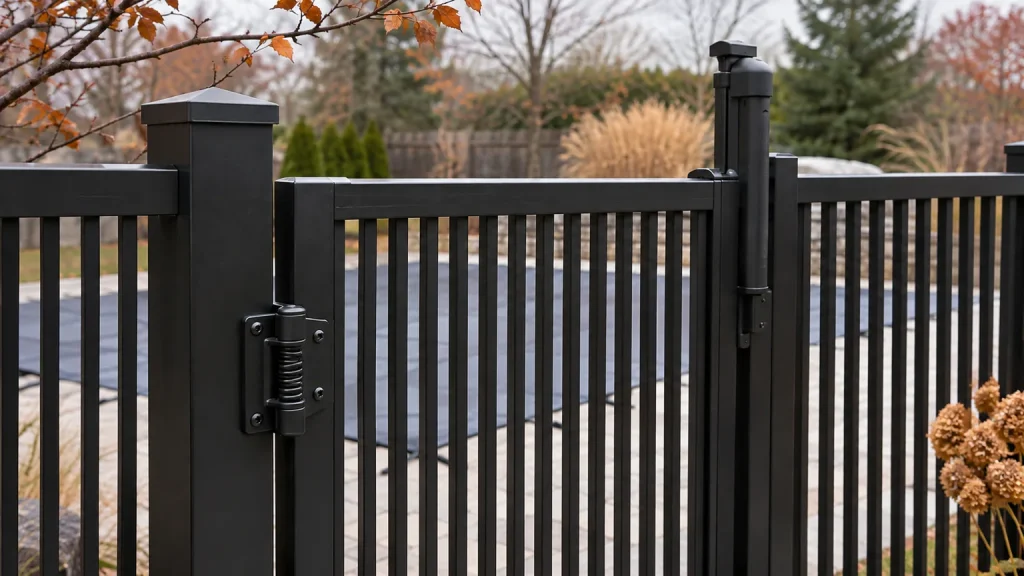
- Self-closing hinges or closers return the gate to the closed position. A pool gate must be self-closing, and the feature is useful anywhere children or pets need to stay in.
- Latches range from simple gravity latches to magnetic and lockable designs. A lockable latch makes sense on side yards that lead to the backyard.
- Drop rods hold the fixed leaf of a double gate. Plan the hole or sleeve in the driveway when it is poured or paved, not after.
- Gate stops prevent the gate from swinging past its frame and straining the hinges.
On commercial and multi-unit sites, where a gate may open dozens of times a day, ask for hinges and latches rated for frequent use and plan a way to adjust them as the gate settles.
Pool Gate Rules in Toronto
If the fence encloses a pool, the gate is the part inspectors look at most closely. Under Toronto Municipal Code Chapter 447, every gate in a pool enclosure must be supported on substantial hinges, and:
- A single gate must be self-closing, with a lockable, self-latching device on the inside near the top of the gate or on the outside at least 1.5 metres above grade. It must be kept locked except when the pool area is in use.
- A double gate needs one self-closing, self-latching leaf as above. The second leaf needs a lockable drop bolt that goes at least 25 millimetres into concrete, asphalt or paving stones.
- Powered closers need a backup system that closes the gate during a power outage, and automatic closing devices must meet the applicable CSA standards.
- Clearance under the gate can be up to 100 millimetres only where a hard surface such as concrete, pavers or patio slabs extends 500 millimetres on each side of the gate. Otherwise, the non-climbable facing must start no more than 50 millimetres above grade.
- Metal pickets in a pool fence or gate can be no more than 38 millimetres apart where the horizontal rails are less than 1.2 metres apart. That is tighter than many standard picket layouts, so tell your supplier the fence is for a pool before it is ordered.
Permits, enclosure heights and the rest of the rules are covered in our guide to Toronto pool fence requirements. Other GTA municipalities have their own pool enclosure bylaws, and some also specify which way a pool gate must swing, so check the local rules outside Toronto.
Winter Care for Aluminum Fence Gates
Aluminum doesn’t rust, and a powder-coated gate needs very little upkeep. Winter is still when most gate problems appear, so a few habits help:
- Keep the swing path and latch side clear of snow and ice, and don’t pile shovelled snow against the gate.
- Rinse de-icing salt off hinges, latches and the lower rails when temperatures allow, and again in spring.
- After freeze-thaw cycles, check that the latch still lines up with its keeper and that self-closing gates close and latch fully on their own.
- Test pool gates before the pool opens in spring, not on opening day.
The same cleaning steps that protect railings also apply to gates. See our guide to caring for powder-coated aluminum railings.
Common Mistakes With Aluminum Fence Gates
- Sizing the gate for people and forgetting bins, mowers and equipment.
- Using one very wide leaf where a double gate would hang better.
- Setting the hinge post like a line post, with a light post or a shallow footing.
- Placing the gate where snow piles up or where the swing hits a step or slope.
- Ordering a standard gate for a pool enclosure without checking picket spacing, latch height and clearance.
- Forgetting the drop-rod receiver before the driveway is paved.
If you are still choosing the fence material itself, our comparison of an aluminum fence vs vinyl fence covers durability, upkeep and cost.
Plan Your Aluminum Fence Gates With AlumiguardMFG
Well-planned aluminum fence gates come down to a few decisions made early: an opening sized for real use, a swing that clears snow and slopes, strong gate posts set below frost movement, and hardware that suits the job, especially around a pool. Winter is a good time to settle those details so your fence and gates are ready to install in spring.
AlumiguardMFG manufactures aluminum fences and matching gates at our North York facility for homes, contractors, builders and commercial projects across Toronto and the GTA. Finishes include White, Warm Beige, Black, Clay, Commercial Brown, Charcoal and Cashmere powder coat.
Send the openings you need, what will pass through them, a few photos of the site and whether the fence encloses a pool, then contact AlumiguardMFG for a quote.