Guard vs handrail is one of the most misunderstood topics in deck, balcony, porch, and stair safety.
Many people use the words “railing,” “guard,” and “handrail” as if they mean the same thing. In casual conversation, that is understandable. In planning, product selection, installation, and code conversations, the difference matters.
A guard is mainly about preventing falls from an open edge. A handrail is mainly about giving someone a secure grip while moving up or down stairs, ramps, or changes in elevation.
That difference can affect the style you choose, the height you need, the way the system is mounted, and whether the finished installation feels safe in daily use.
For Ontario homeowners, contractors, builders, and property managers, understanding guard vs handrail early can prevent expensive redesigns later. It can also make conversations with manufacturers, installers, inspectors, and designers much easier.
Why the Guard vs Handrail Difference Matters
The guard vs handrail distinction matters because railings are not only decorative. They are safety systems.
A beautiful exterior railing can improve curb appeal, define a deck, open up a balcony view, or make stairs feel more finished. But if it does not perform the right safety function, appearance alone is not enough.
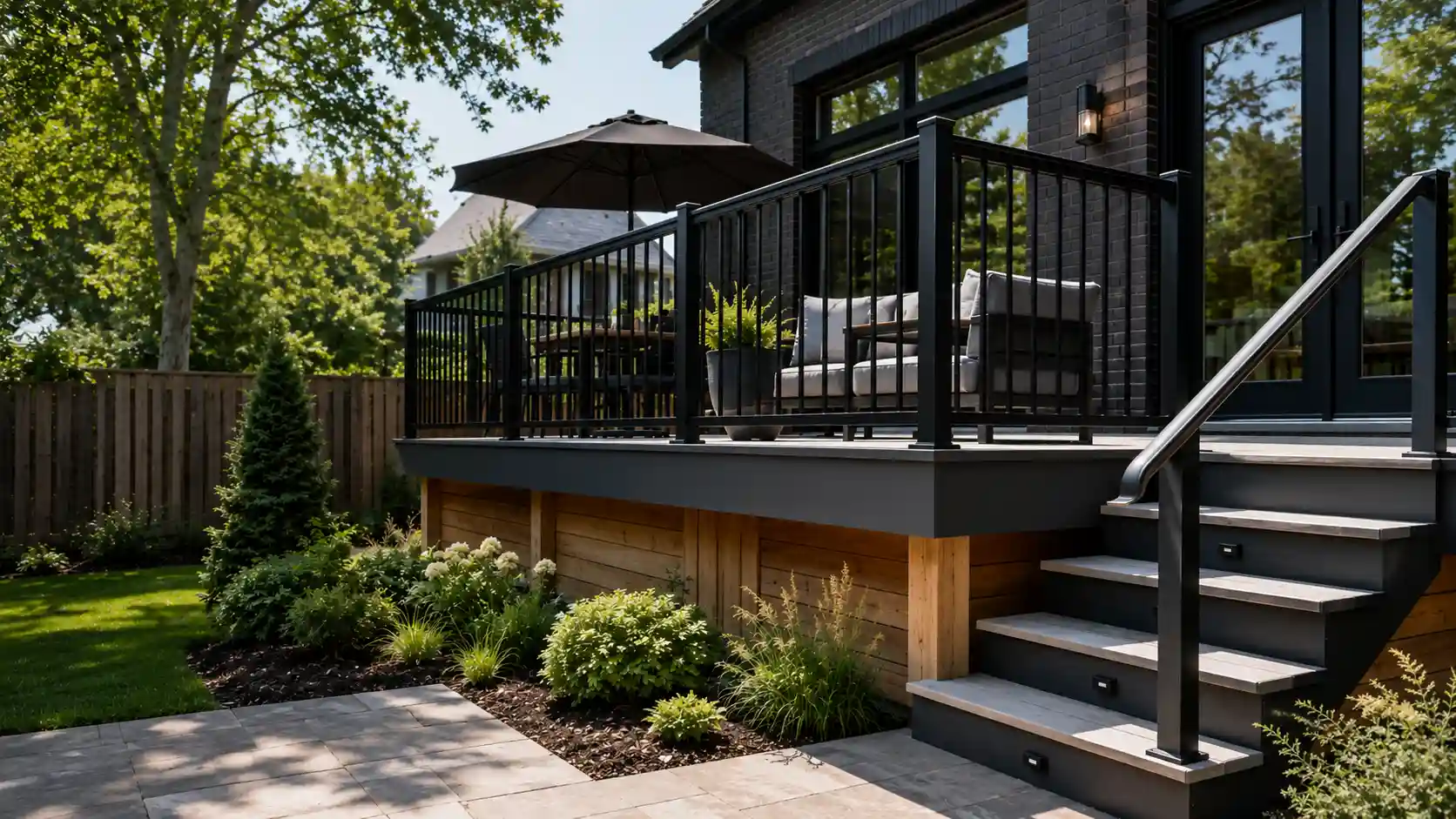
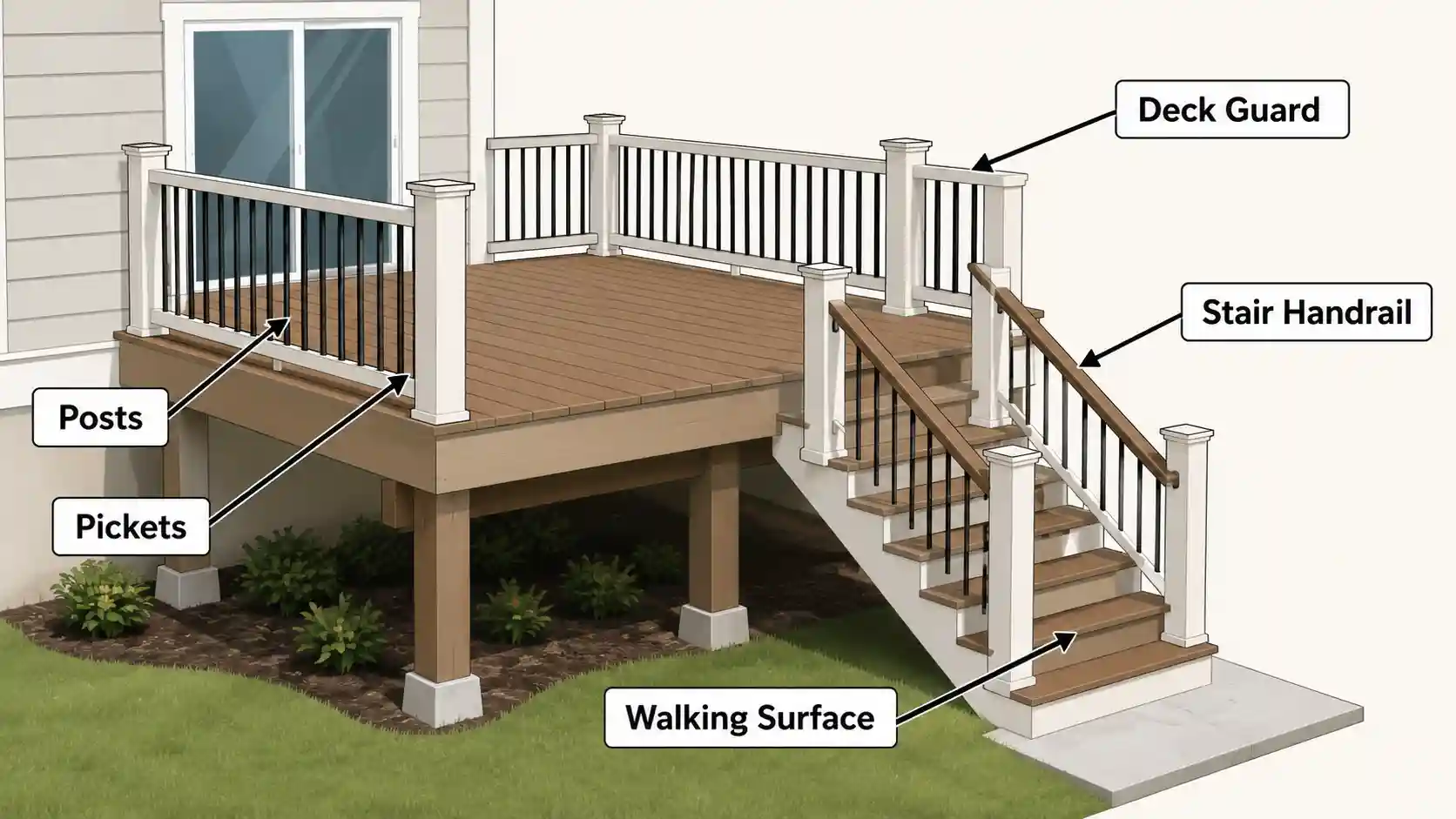
For example, a raised deck may need a guard around the open sides to reduce fall risk. A set of stairs may need a handrail so people have something stable to hold while going up or down. In some layouts, one railing assembly may be designed to do both jobs. In others, the guard and handrail may need to be treated separately.
This is why choosing a system from a product page alone is not always enough. You need to understand the space first.
If you are comparing styles, AlumiguardMFG’s aluminum deck railing systems are a useful place to start because deck applications often involve both edge protection and stair access. For exterior areas such as porches, walkouts, and elevated entrances, exterior aluminum railings may be the more relevant category.
What Is a Guard?
A guard is a protective barrier installed where there is a drop, open side, balcony edge, deck edge, landing, or elevated walking surface.
Its main purpose is to help prevent people from falling off the edge.
That means a guard is usually judged by its location, height, strength, openings, and ability to resist movement. It needs to feel stable when someone leans near it. It also needs to be designed so the openings are appropriate for the space.
On a deck, the guard is usually the railing around the perimeter. On a balcony, it is the barrier along the open edge. On stairs, a guard may be installed on the open side if there is a drop beside the stairway.
A simple way to think about it is this: if the main concern is “Could someone fall from this edge?” you are probably talking about a guard.
That is why guard vs handrail confusion often starts on raised decks. People see a railing and assume it is just one thing. But the perimeter railing is usually performing a guard function, while the stair portion may also need a handrail function.
What Is a Handrail?
A handrail is a rail designed to be held by hand for support and balance.
Its main job is not to block an edge. Its job is to help someone move safely along stairs, ramps, or sloped walking areas.
A good handrail should be easy to grasp, comfortable to follow, continuous where needed, and positioned where the hand naturally reaches. If someone is carrying groceries, walking in winter boots, helping a child, or using stairs in wet weather, the handrail becomes more than a finishing detail. It becomes a practical safety feature.
This is where “looks good” and “works well” can be different things.
A wide decorative cap may look attractive, but it may not be easy to grip. A glass guard may create a clean modern look, but a separate rail or properly designed top rail may still be needed for stair use. A heavy-looking railing can still feel awkward if the hand-contact surface is poorly shaped.
Understanding guard vs handrail helps you ask better questions before installation begins.
Guard vs Handrail Quick Comparison
Here is a simple breakdown.
| Feature | Guard | Handrail |
|---|---|---|
| Main purpose | Helps prevent falls from open edges | Helps people keep balance while moving |
| Common locations | Deck edges, balconies, landings, raised porches | Stairs, ramps, stepped entrances |
| Main design concern | Height, strength, openings, attachment | Grip, continuity, height, comfort |
| Usually vertical or barrier-like? | Yes | Not necessarily |
| Can it be decorative? | Yes, if safety function remains | Yes, if graspability remains |
| Can one system do both? | Sometimes | Sometimes |
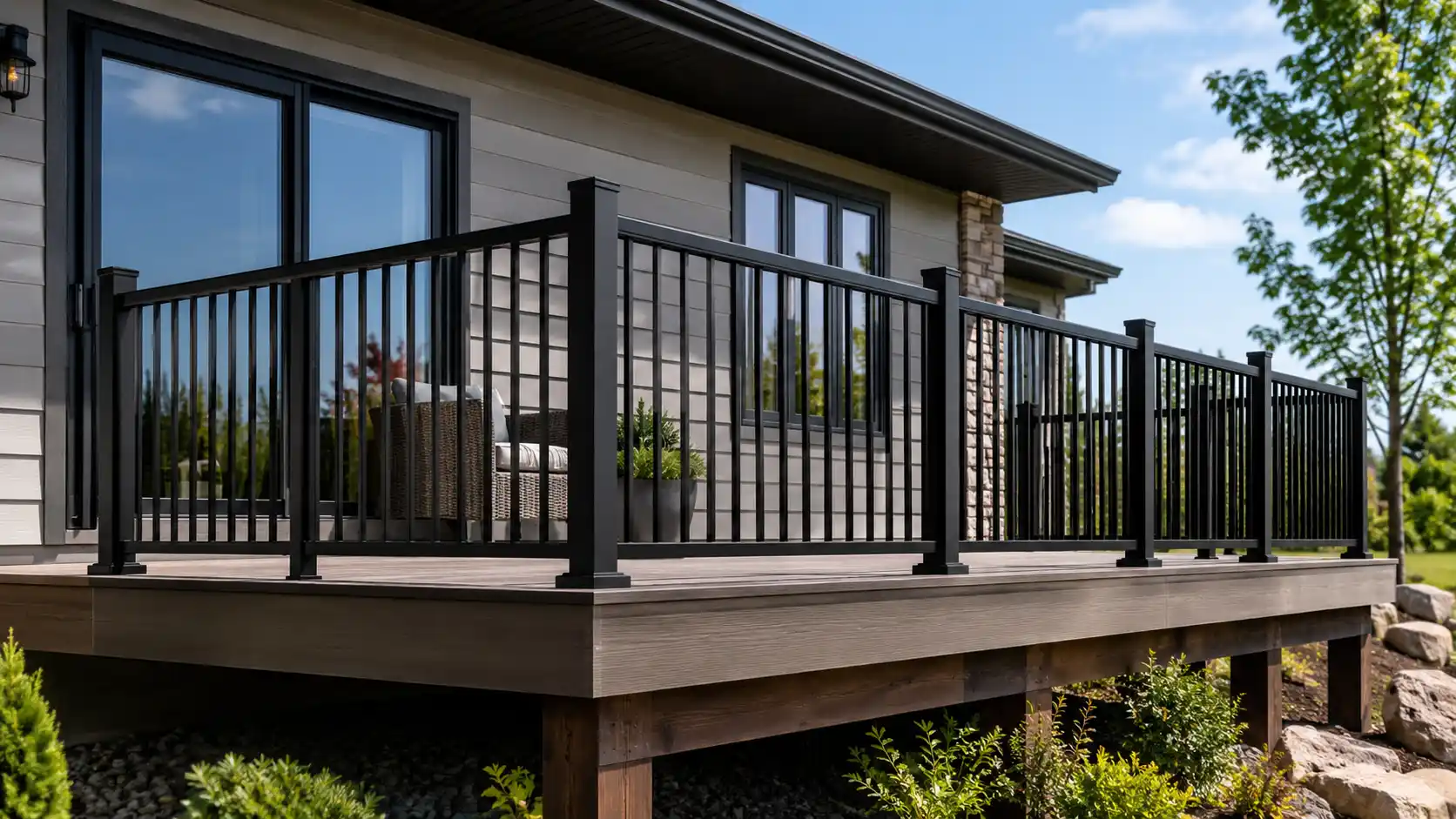
This table is useful, but real projects need context. A stair next to an open drop may require both edge protection and a graspable support. A balcony may need a guard but not a separate handrail if there is no stair or ramp movement involved.
That is why the best answer to “Do I need a guard or a handrail?” is usually: what is the space, how high is it, how is it used, and where are people moving?
How Guard vs Handrail Shows Up in Ontario Projects
In Ontario, railing conversations often include terms such as guards, handrails, stairs, landings, height above grade, openings, and walking surfaces.
Before starting a deck, balcony, porch, or stair project, it is smart to review the Ontario Building Code and confirm local requirements with your municipality or qualified professional. Municipal deck guides, such as the City of Peterborough Residential Deck Guide, can also help homeowners understand what details may be expected in permit drawings.
This is where guard vs handrail becomes more than terminology.
A guard may be discussed because the deck walking surface is above grade. A handrail may be discussed because the stair needs a safe grip. A landing may create another guard condition. A built-in bench near a guard may change where height is measured from. A glass system may need special attention to panel support and edge protection.
Those details are easy to miss when the project is still just an idea.
If you are already checking an existing system, AlumiguardMFG’s deck railing inspection checklist can help you look at posts, fasteners, glass panels, stairs, and movement before deciding whether to repair or replace.
Guard vs Handrail on Decks
Decks are one of the most common places where people confuse the two terms.
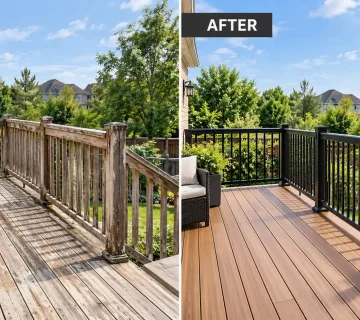
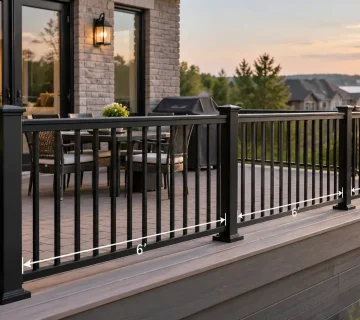
A deck perimeter railing is usually acting as a guard. Its job is to create a protective barrier around the open sides of the deck. It should feel solid, properly anchored, and suitable for the height and layout of the deck.
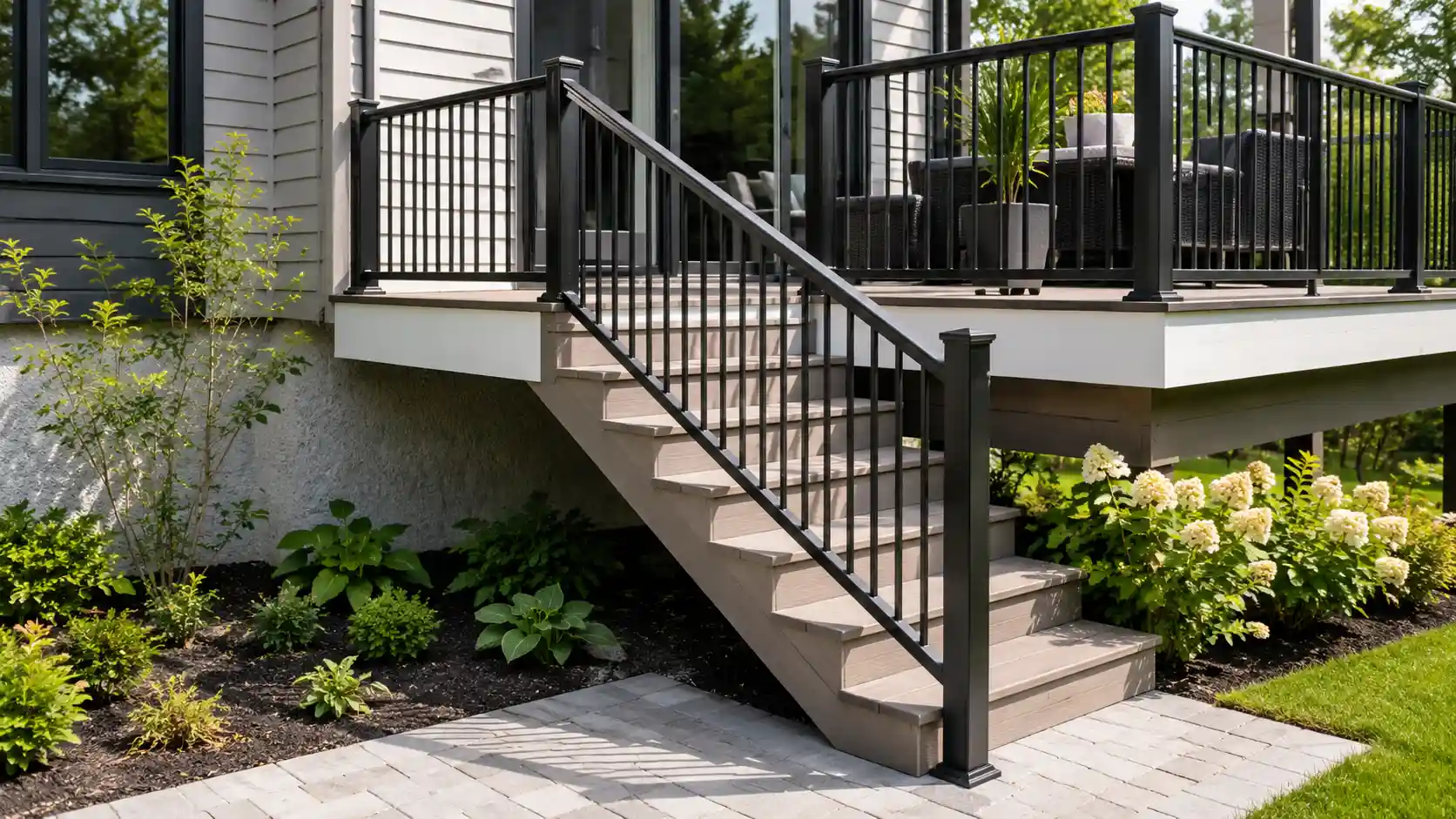
The stair railing, however, may need to serve as a handrail. If the top rail is properly shaped and positioned, it may do that job. If not, the stair may need a separate handrail.
This is the practical question: “Can I hold it comfortably while walking up and down?”
If the answer is no, the system may look finished but still fall short in everyday use.
For wood-surface projects, it is worth reviewing the logic behind picket railing wood-floor installation and glass railing wood-floor installation. For concrete surfaces, compare the installation approach for picket railings on concrete and glass railings on concrete.
The mounting surface matters because a guard is only as reliable as its connection.
Guard vs Handrail on Balconies and Landings
Balconies and landings are more often guard-focused.
The main safety question is usually whether the open edge is properly protected. A balcony guard should not feel loose, undersized, or visually improvised. It should be part of a complete system that fits the building, the exposure, and the way the space is used.
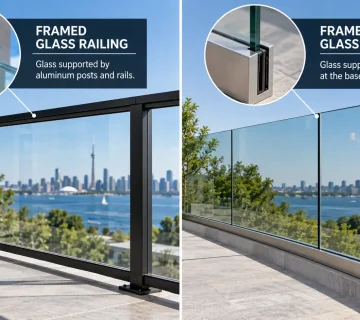
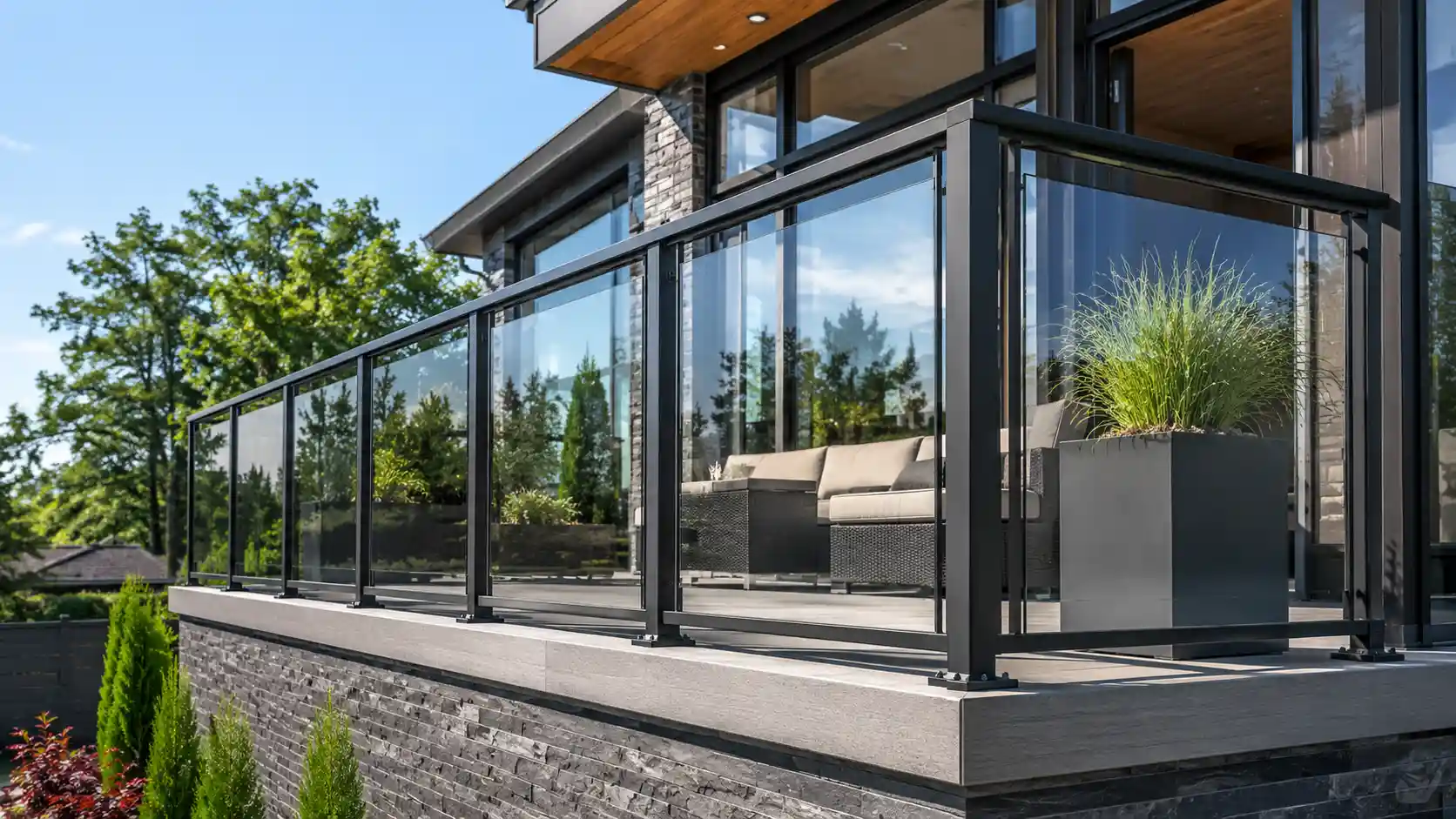
For homeowners who want a more open view, glass railings can be a strong option because they create a barrier without making the space feel closed in. For a more classic look, aluminum picket systems can offer clean lines, durability, and lower maintenance.
So where does a handrail come in?
If the balcony connects to stairs, stepped access, or a transition area, a handrail may become part of the discussion. If it is simply a flat balcony edge, the primary issue is usually the guard.
This is why guard vs handrail decisions should be made by looking at the whole path of movement, not just one section of railing.
Guard vs Handrail on Stairs
Stairs are where the difference becomes most obvious.
People use stairs while shifting weight, changing elevation, and adjusting balance. That makes the handrail important. It should be easy to hold and positioned so someone can use it naturally from the bottom of the stairs to the top.
But stairs can also have open sides. When they do, the railing assembly may need to act as a guard as well.
A common question is: “Can one railing act as both a guard and a handrail?”
Sometimes, yes. But only when the system is designed for both functions. The top rail must be suitable as a hand-contact surface, and the overall assembly must still provide the protective barrier needed at the open side.
This is where custom planning helps. A simple decorative rail may not solve everything. A properly planned aluminum or glass railing system can combine safety, comfort, and style in a more reliable way.
If fall prevention is a concern for older adults, children, rental properties, or high-traffic areas, the Public Health Agency of Canada offers helpful general information on reducing fall risks at home.
Material Choices After Guard vs Handrail Is Clear
Once you know what the railing needs to do, choosing the material becomes easier.
Aluminum is a strong option for many guards because it is durable, low maintenance, and suitable for exterior weather. It can work well for decks, porches, stairs, balconies, and commercial spaces. Powder coated finishes also help create a clean, finished appearance with less upkeep than wood.
If maintenance is a priority, AlumiguardMFG’s guide to powder coated aluminum railings care is a helpful next read.
Glass is a strong option when the view matters. A glass guard can protect an open edge while keeping the space visually open. This is especially useful for elevated decks, modern homes, balconies, patios, and properties where natural light or scenery is part of the design.
Deco railings are different. They are often chosen when the railing system needs more character or architectural detail. If the goal is to add a custom visual element while still using a durable system, deco railings may be worth exploring.
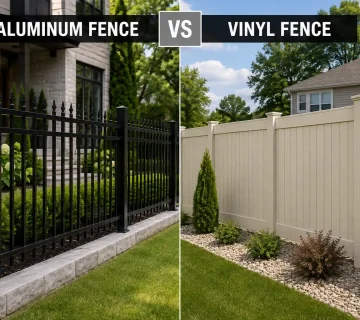
Fences are another category entirely. They define boundaries, pool areas, yards, gardens, and property lines. They are usually not handrails, and they are not always guards. If the project includes perimeter security or pool planning, review aluminum fences separately.
Common Guard vs Handrail Mistakes to Avoid
The first mistake is choosing a railing only by appearance.
A railing can look modern and still be wrong for the space if it does not provide the correct function. Always begin with the safety need, then choose the design.
The second mistake is assuming all top rails are handrails.
Some top rails are easy to grasp. Others are too wide, too flat, too interrupted, or positioned in a way that makes them less useful on stairs. For a stair, comfort and continuity matter.
The third mistake is ignoring the mounting surface.
A strong guard attached to weak framing is not a strong system. Wood, concrete, fascia, posts, anchors, blocking, and fasteners all affect performance. This is especially important on older decks where hidden moisture damage may be present.
The fourth mistake is forgetting about weather.
Ontario properties deal with rain, snow, ice, thaw cycles, salt, humidity, and temperature swings. Exterior systems should be selected with long-term exposure in mind.
The fifth mistake is treating code as an afterthought.
Code-related questions should come before fabrication and installation, not after. If a municipality, designer, inspector, or engineer needs specific details, it is better to know that early.
The sixth mistake is using a fence solution where a guard solution is needed.
A fence may define a yard, but an elevated walking surface needs a barrier designed for that condition. For example, pool enclosure planning is a different topic from deck edge protection. If your project includes a pool, review AlumiguardMFG’s article on Toronto pool fence requirements as a separate planning step.
The seventh mistake is failing to ask whether one system must do two jobs.
The best guard vs handrail planning often comes down to this: does the railing only protect an edge, only support movement, or need to do both?
How Builders, Contractors, and Property Managers Should Think About Guard vs Handrail
For builders and contractors, the guard vs handrail distinction is important because it affects ordering, drawings, site measurements, installation sequencing, and client expectations.
A homeowner may simply say, “We need railings.” A builder needs to know whether that means guards around a deck, handrails on stairs, glass panels on a balcony, aluminum pickets on a porch, gates, dividers, or a mix of systems.
That is why clear language helps reduce mistakes.
For larger projects, pre-planning can also support better scheduling. Contractors may need systems that are easier to install, consistent across multiple units, or adaptable to different mounting conditions. AlumiguardMFG’s Business Opportunities page is a relevant starting point for contractors, builders, wholesalers, and partners looking at railing solutions from a supply or project perspective.
For general product planning, the services page also outlines the company’s broader railing, divider, fence, and deco railing categories.
Local Planning for Toronto, Mississauga, Vaughan, and the GTA
Guard and handrail needs can show up differently from one property to another.
A Toronto homeowner may be updating a compact backyard deck with stairs. A Mississauga property owner may be replacing balcony railings. A Vaughan builder may need multiple railing systems for a residential or commercial project. A North York property manager may be looking at worn exterior stairs after winter.
The basic guard vs handrail concept stays the same, but the project context changes.
If you are planning locally, AlumiguardMFG has location pages for glass and picket railings in Toronto, glass and picket railings in Mississauga, glass and picket railings in Vaughan, and glass and picket railings in North York.
These pages can help users connect the general railing decision to the areas AlumiguardMFG serves across the GTA.
Choosing the Right System Starts With the Right Question
The best railing decision does not start with colour, glass type, or picket style.
It starts with function.
Is the system protecting an open edge? Is it helping someone move safely up and down stairs? Is it doing both? Is the mounting surface wood or concrete? Is the property residential, commercial, or multi-unit? Is the priority privacy, view, durability, low maintenance, or architectural detail?
Once those questions are clear, the design decision becomes much easier.
When the guard vs handrail choice is understood from the beginning, the final railing system is more likely to look right, feel secure, and support the way the space is actually used.
AlumiguardMFG manufactures and supplies aluminum and glass railing systems for residential and commercial properties across Toronto and the GTA. Whether you are planning aluminum deck railings, exterior aluminum railings, glass railings, aluminum fences, or custom railing solutions, the team can help connect safety, style, and practical installation needs.
To learn more about the company’s approach, visit the About AlumiguardMFG page. If you are ready to discuss a project, request product guidance, or compare railing options for your property, contact AlumiguardMFG to get started.