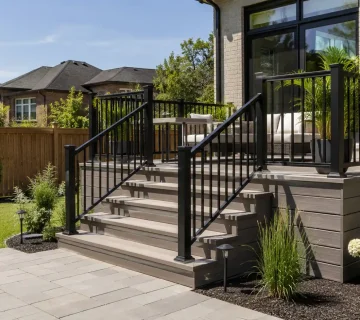
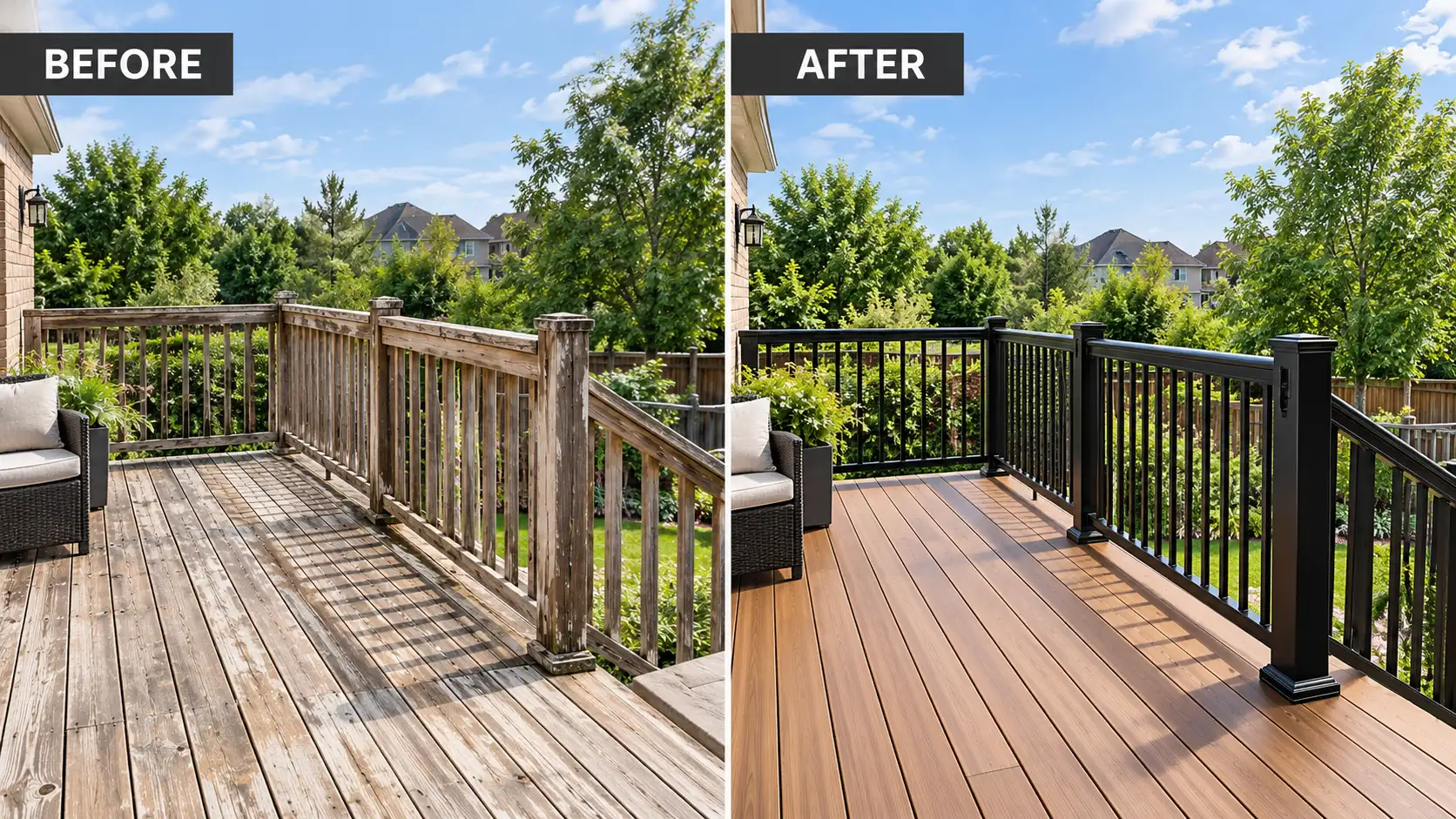
Deck railing replacement can refresh an older deck without forcing you to rebuild the entire outdoor space. The key is to treat the railing as a safety system connected to the deck structure, not as a decorative part that can simply be swapped without checking what is underneath.
If your current wood, iron, or aging metal railing is loose, worn, difficult to maintain, or visually dated, a new Alumiguard aluminum deck railing system may be a practical upgrade. Before ordering anything, however, confirm that the existing deck can support the new system and that the replacement plan fits current code, mounting, and site conditions.
Why Deck Railing Replacement Is Different From Building a New Deck
A new deck starts with a known framing plan. An older deck may have years of moisture exposure, previous repairs, hidden blocking, moved fasteners, replaced boards, or railing posts that were installed differently from what a new system requires.
That makes deck railing replacement a retrofit project. A well-planned deck railing replacement is not only about removing the old railing and installing a cleaner one. You need to verify the condition of the structure that will carry the new posts and loads.
A good replacement project answers four questions early:
- Is the deck structure still sound?
- Where can the new posts be securely mounted?
- Does the planned guard and stair arrangement meet current requirements?
- Can the new system be measured and fabricated without relying on the old railing layout?
Alumiguard’s deck railing inspection checklist is a useful starting point if you are not sure whether the existing system needs a repair or full replacement.
Can you replace deck railings without rebuilding the deck?
Often, yes. If the framing, rim joists, blocking, stairs, and supporting structure are sound, deck railing replacement can usually be planned as a separate upgrade.
The important word is “sound.” New aluminum posts should not be attached to rotten wood, loose fascia, cracked concrete, or weak framing simply because the old railing was mounted there. If the deck edge has movement or moisture damage, correct that condition before the new railing goes in.
1. Inspect the Existing Deck Before Removing Anything
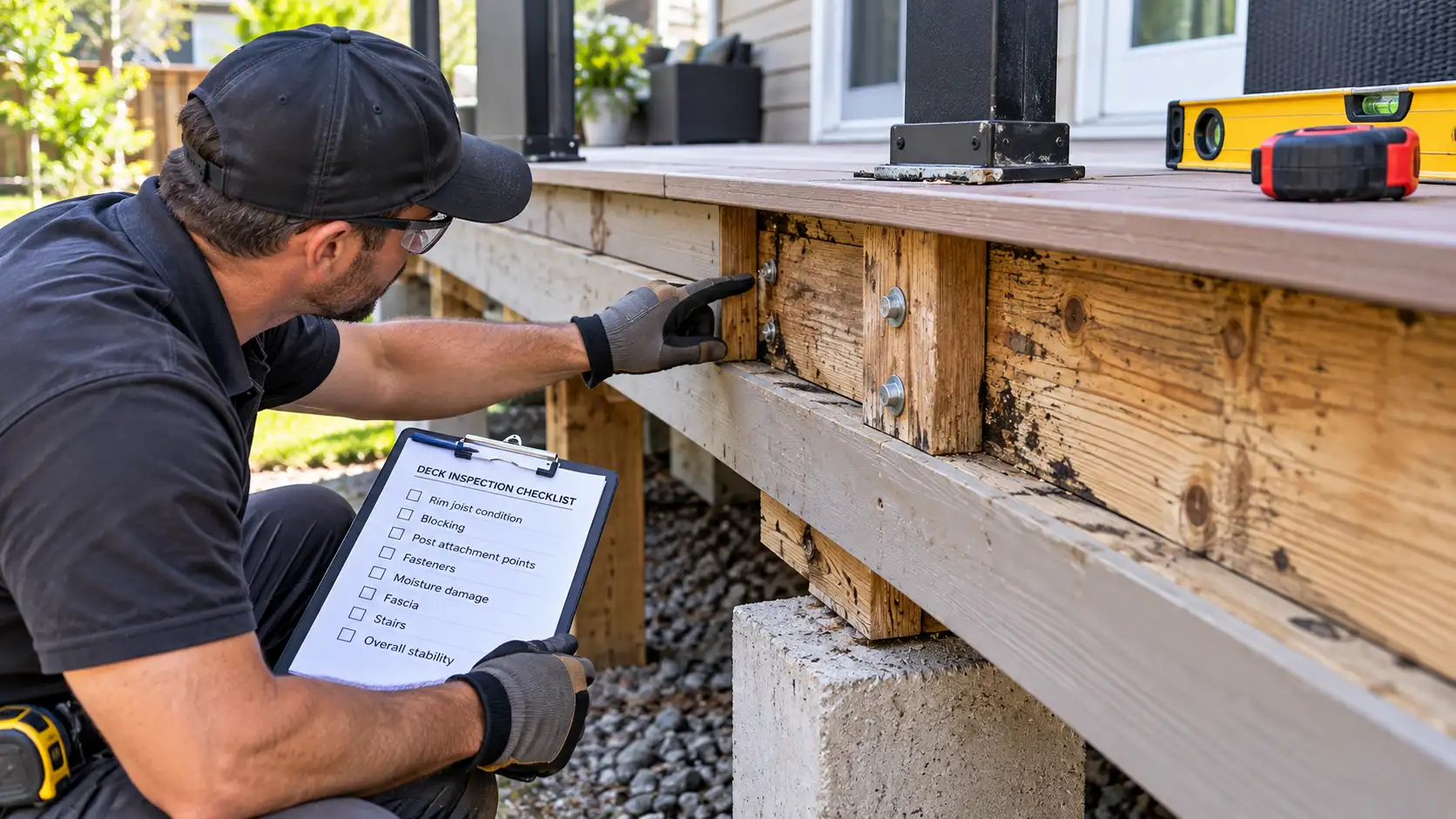
Start by checking the deck with the old railing still in place. This helps you understand where the current posts are attached, which sections move, and whether the problem is limited to the railing or extends into the deck itself.
Look closely at:
- Soft or discoloured wood around post bases
- Loose rim boards or fascia
- Cracks around concrete anchors
- Posts that move independently of the railing
- Water staining below mounting points
- Split framing or oversized old fastener holes
- Stair stringers and landings that feel unstable
- Previous patches or reinforcement around railing posts
Do not assume the old post locations are the right locations for the new system. Deck railing replacement is an opportunity to correct weak attachment details instead of reproducing them.
What if only one railing section is loose?
An isolated loose section may be repairable if the surrounding structure and components are in good condition. Multiple loose posts, recurring rot, mismatched repairs, or widespread corrosion usually justify a broader review.
If the railing is older and replacement parts are no longer available, replacing one section can also create fit, finish, and compatibility problems. In that situation, a full deck railing replacement may produce a more consistent result.
2. Confirm Code and Permit Questions Before You Order
Railing requirements can change over time, and an existing deck may have been built under older rules. A new system should be planned around the requirements that apply to the current project rather than copying the old railing height, spacing, or attachment method.
Ontario’s current Building Code information should be the baseline for provincial requirements. Municipalities enforce the Building Code and may have their own permit process, application documents, and review expectations.
For Toronto properties, the City’s Decks and Porches application guide explains the permit process for applicable projects, while its building documentation requirements identify details that deck and porch plans may need to show, including guard construction.
Alumiguard also has a dedicated deck railing permit Ontario guide that explains the planning questions homeowners and contractors should raise before replacement work begins.
Does deck railing replacement require a permit in Ontario?
There is no single answer for every municipality or project scope. A straightforward replacement may be treated differently from work that changes the deck structure, stairs, layout, guard configuration, or supporting framing.
Before demolition, describe the actual scope to the local building department. If deck framing, concrete, stairs, landings, or structural attachments are being altered, do not assume the project is only cosmetic.
3. Decide Whether Aluminum, Glass, or a Mixed System Fits the Deck
Material selection should come after the deck condition is understood. In a deck railing replacement, the best material is the one that fits both the structure and the way the space is used.
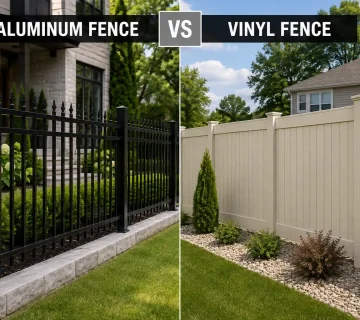
Aluminum picket railings are often chosen for low maintenance, corrosion resistance, straightforward sightlines, and compatibility with many residential deck styles. Glass can preserve views and create a more open appearance, but it introduces different panel, hardware, cleaning, and mounting considerations.
For some projects, a mixed system works best. A homeowner may use aluminum pickets around stairs and side edges, then use glass where the backyard view matters most.
Here is a practical comparison:
| Railing option | Strong fit for | Planning considerations |
|---|---|---|
| Aluminum picket | Low-maintenance residential decks, stairs, rental properties | Post layout, mounting surface, finish, stair transitions |
| Framed glass | Decks where views matter but a defined frame is preferred | Glass sizing, cleaning access, wind exposure, hardware |
| More open glass systems | View-focused decks and modern exteriors | Engineering, panel handling, mounting, budget |
| Decorative aluminum | Traditional homes, front porches, character upgrades | Pattern consistency, fabrication, transitions |
| Mixed aluminum and glass | Decks with different privacy and view needs | Clean transitions between systems, consistent finish |
A successful deck railing replacement balances appearance with the realities of the existing structure.
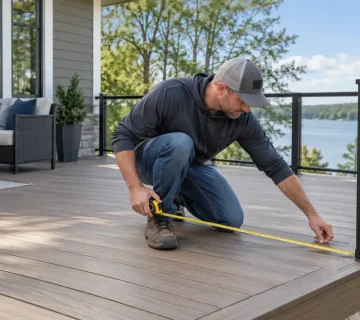
4. Measure the Deck as It Exists Today
Do not order a new railing from old drawings, a real-estate plan, or measurements taken before deck repairs. Existing decks can move, settle, warp, receive new boards, or change slightly after years of use.
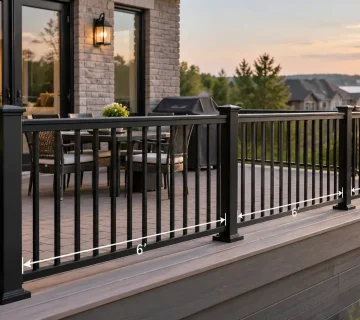
Measure every straight run, stair section, corner, opening, wall return, gate location, and change in elevation. Record the mounting surface and take photos of unusual conditions.
Alumiguard’s deck railing measurements guide explains what to capture before requesting a quote or fabrication layout.
Should the new posts go where the old posts were?
Not necessarily. The new post layout should follow the chosen railing system, the final measurements, the mounting method, and the available structural support.
Forcing new posts into old locations can create awkward panel lengths or weak connections. It is usually better to let the final deck railing replacement layout respond to the actual framing and product requirements.
5. Choose the Right Mounting Method for the Existing Deck
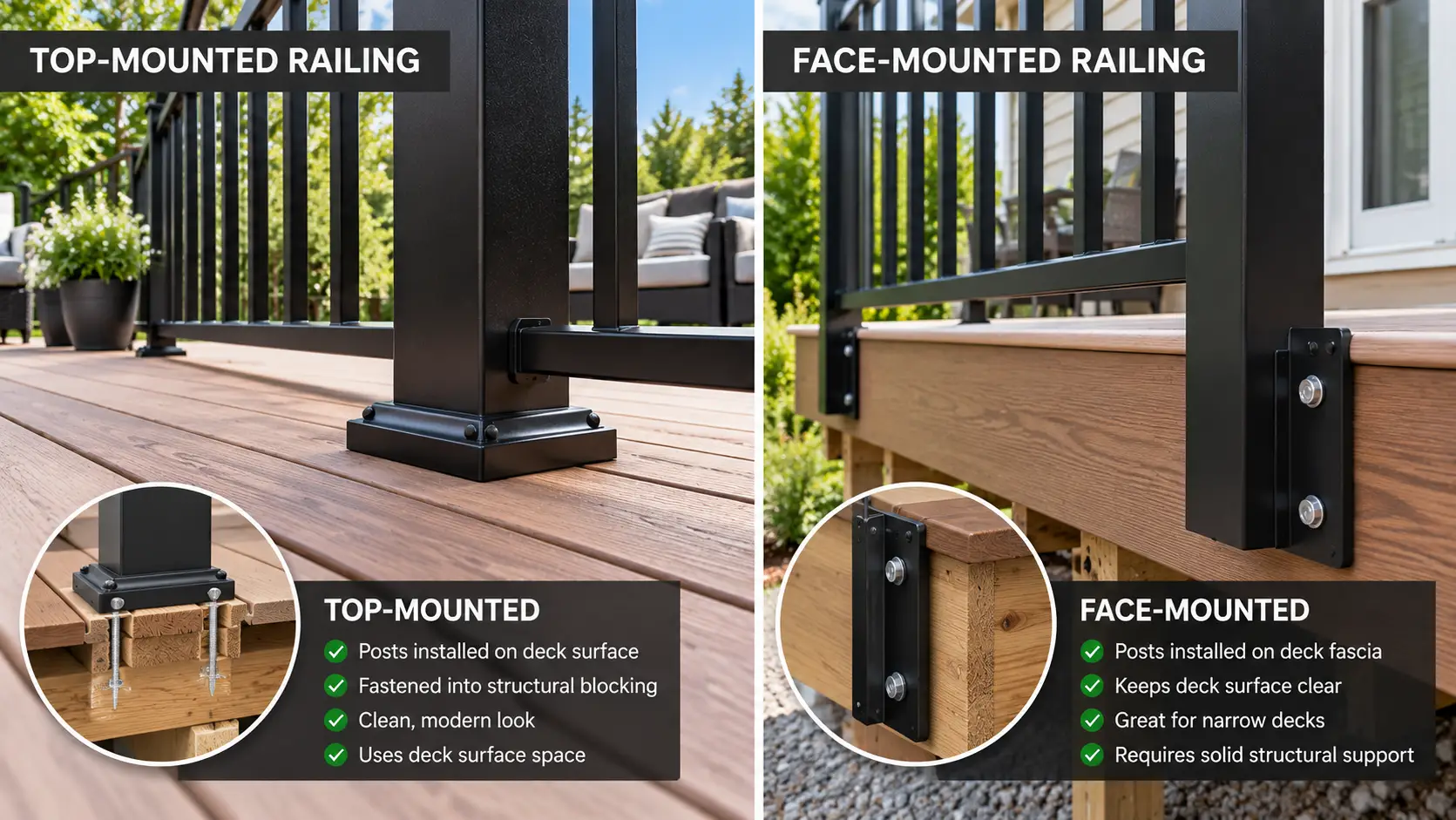
Mounting affects usable deck space, post position, edge conditions, waterproofing details, and the structure that carries the railing.
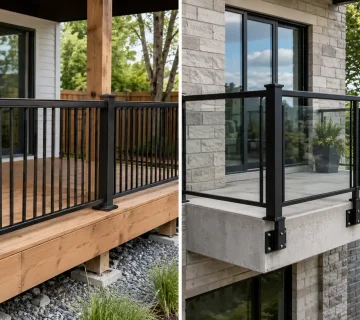
A top-mounted post sits on the walking surface. A face- or fascia-mounted post attaches at the deck edge or slab face where the system and structure allow it. Neither approach is automatically better for every project.
Review Alumiguard’s top-mounted vs face-mounted railing guide before finalizing a retrofit. It helps explain why the same railing can behave differently depending on where the posts are attached.
For a wood deck, the new post needs reliable framing or blocking below the finished surface. For concrete, anchor type, slab condition, edge distance, and project-specific requirements matter.
Can aluminum railing be installed on composite decking?
Yes, but the railing should be fastened into appropriate structural support, not into the composite board alone. Composite decking is the finished walking surface; the railing connection still needs a suitable structural base below or beside it.
This is an important deck railing replacement detail because a beautiful new deck surface can hide framing that was never prepared for the new post layout. Confirm blocking and attachment before drilling the finished boards.
6. Plan Removal, Repairs, and Installation in the Right Order
Do not remove the old railing days or weeks before the new system is ready unless the open edge can be safely protected. A raised deck without a completed guard creates an obvious fall hazard.
A practical sequence is:
- Inspect and document the existing deck.
- Confirm the replacement scope and code questions.
- Choose the railing system and mounting approach.
- Take final measurements.
- Complete drawings or fabrication details where needed.
- Order or fabricate the new components.
- Remove the old railing.
- Repair framing, fascia, concrete, or blocking.
- Install and align the new railing.
- Complete a final check of posts, stairs, fasteners, panels, and transitions.
This sequence keeps deck railing replacement from turning into an open-ended deck repair project after the old guard has already been removed.
Should you replace deck boards at the same time?
Sometimes. If several boards are damaged around railing posts, replacing them before the new railing is installed can create a cleaner base and reduce future rework.
But deck boards and structural framing are different issues. New boards will not fix weak joists, loose rim framing, inadequate blocking, or deteriorated support. If the problem is structural, address the structure first.
7. Compare Quotes by Scope, Not Just Price
Two deck railing replacement quotes can look similar while including very different work.
One contractor may include old railing removal, disposal, site measurement, blocking, custom fabrication, stair sections, and final cleanup. Another may price only the new railing materials and standard installation.
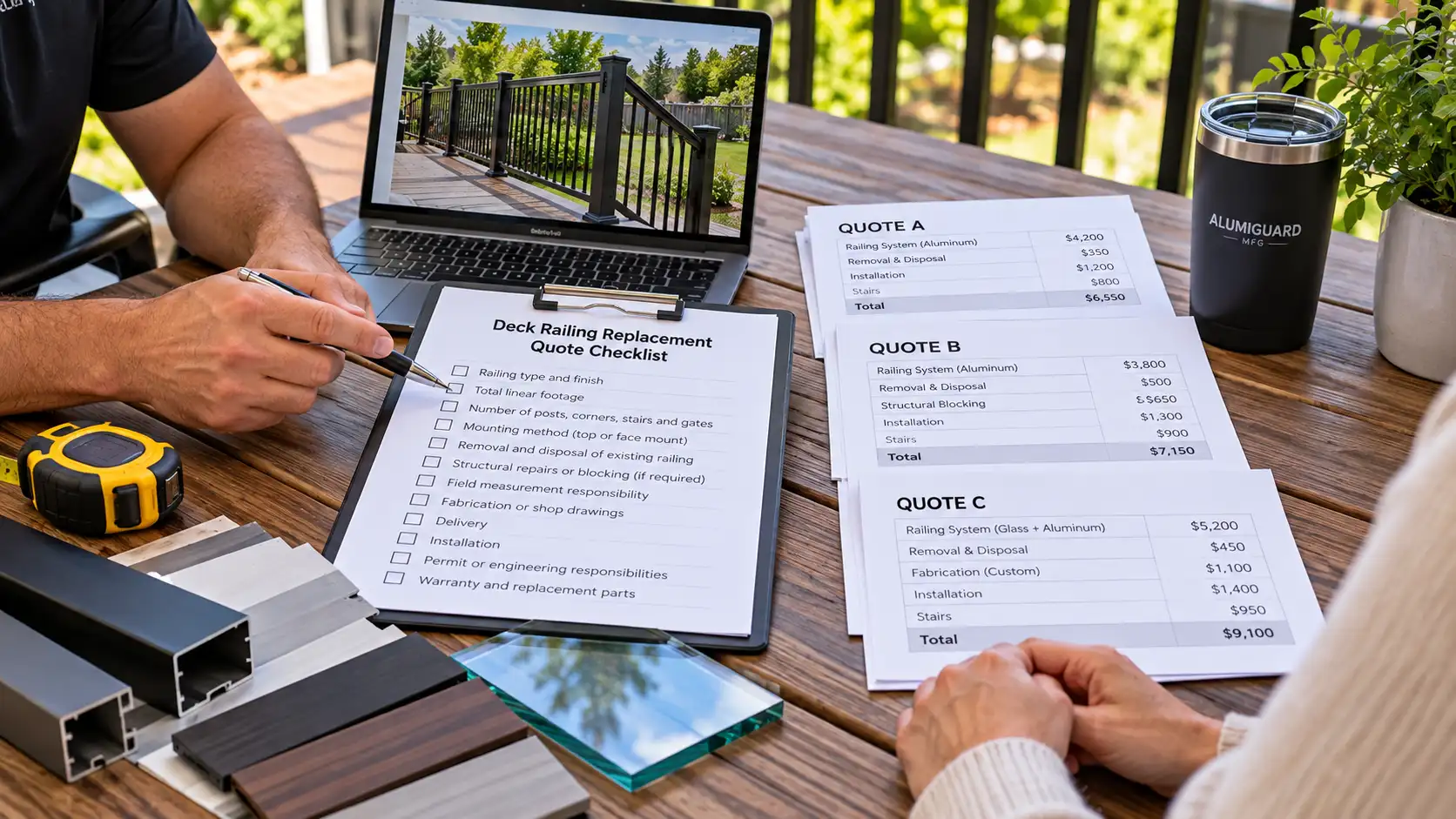
For deck railing replacement, ask each bidder to identify:
- Railing type and finish
- Total linear footage
- Number of posts, corners, stairs, and gates
- Mounting method
- Removal and disposal of the old railing
- Structural repairs or blocking, if required
- Field measurement responsibility
- Fabrication or shop drawings
- Delivery
- Installation
- Permit or engineering responsibilities where applicable
- Warranty and replacement-part availability
Alumiguard’s guide to comparing railing quotes can help you normalize competing proposals before making a decision.
What is the biggest hidden cost in a railing replacement?
The supporting structure is often the biggest unknown. If the old railing comes off and reveals rotten framing, damaged concrete, weak blocking, or poorly located attachment points, the project scope can change.
That is why the best deck railing replacement quotes are based on clear site information and realistic structural assumptions, not only a price per linear foot.
Common Deck Railing Replacement Mistakes to Avoid
The first mistake is ordering from the old railing dimensions. Measure the deck itself.
The second is assuming the existing post locations are automatically reusable. New system requirements may call for a different layout.
The third is installing into weak framing. A new railing cannot compensate for an unstable deck edge.
The fourth is choosing the railing style before checking stairs, mounting surfaces, and guard requirements.
The fifth is treating all aluminum or glass systems as interchangeable. Profiles, post spacing, hardware, anchors, and installation methods are system-specific.
The sixth is removing the old guard too early. Coordinate demolition with fabrication and installation so the deck is not left unnecessarily exposed.
The seventh is comparing quotes by the bottom-line number alone. A complete deck railing replacement scope should make responsibilities clear before work begins.
Plan Your Deck Railing Replacement With AlumiguardMFG
Deck railing replacement is one of the most effective ways to update an existing outdoor space when the deck itself is still worth keeping. The strongest projects begin with the structure, then move through code, measurements, mounting, material selection, and installation in that order.
AlumiguardMFG manufactures aluminum and glass railing systems for residential and commercial projects across Toronto and the GTA. Its aluminum deck railing range includes multiple styles and configurations for wood and concrete applications, giving homeowners, builders, and contractors options for both straightforward upgrades and more customized layouts.
If you are planning a deck railing replacement, gather photos, approximate measurements, the deck location, stair details, and any known framing or concrete concerns before asking for pricing. Then contact AlumiguardMFG to discuss the railing system, mounting approach, fabrication details, and next steps for your project.