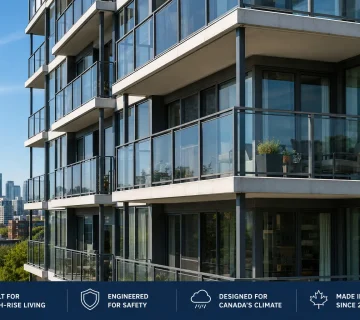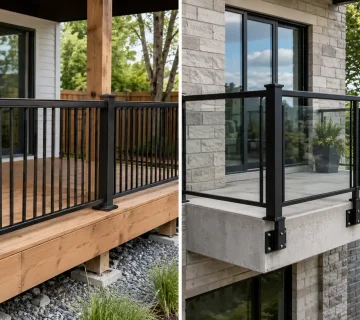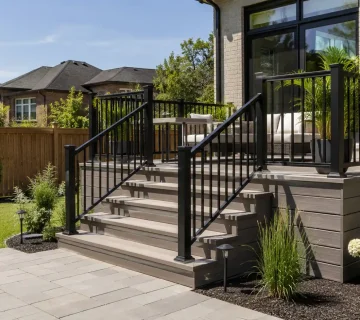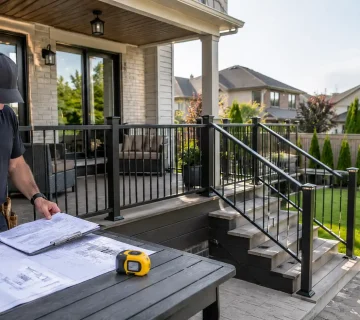
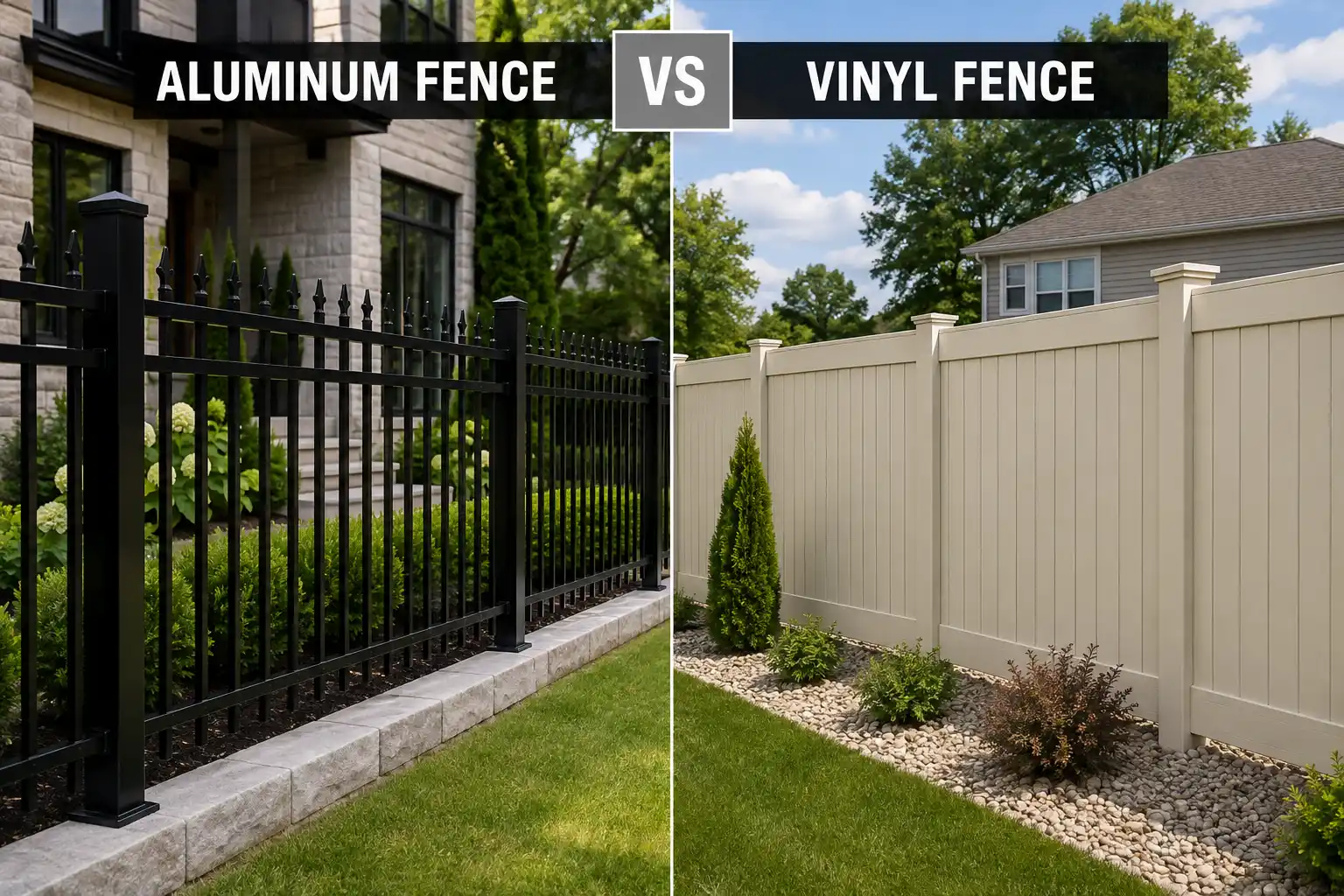
Aluminum fence vs vinyl fence is a practical comparison for anyone choosing a low-maintenance perimeter system in Ontario. Both materials can create a clean, durable boundary, but they solve different problems: aluminum is often strongest when visibility, architectural detail, gates, and long-term repairability matter, while vinyl is often chosen when solid privacy is the first priority.
Before comparing finishes or colours, start with the job the fence must do. Alumiguard MFG’s aluminum fencing systems include privacy panels, gates, black aluminum fencing, and metal fence panels for residential, commercial, and larger development applications. Knowing whether you need an open boundary, a privacy screen, a pool enclosure, or a high-use gate will make the aluminum fence vs vinyl fence decision much easier.
Aluminum Fence vs Vinyl Fence: The Quick Answer
There is no universal winner in the aluminum fence vs vinyl fence debate. The better material depends on privacy, exposure, site conditions, gate use, appearance, maintenance expectations, and the quality of the specific system being quoted.
Choose aluminum when you want a crisp architectural look, open sightlines or metal privacy panels, corrosion resistance, strong gate integration, and components that can often be repaired or replaced individually.
Choose vinyl when you want a solid privacy barrier, prefer the appearance of PVC panels, and have a product engineered for the local climate, wind exposure, and installation conditions.
A good fence decision is not “metal is always better” or “vinyl is always cheaper.” It is a system decision.
1. Compare Durability in Ontario Weather
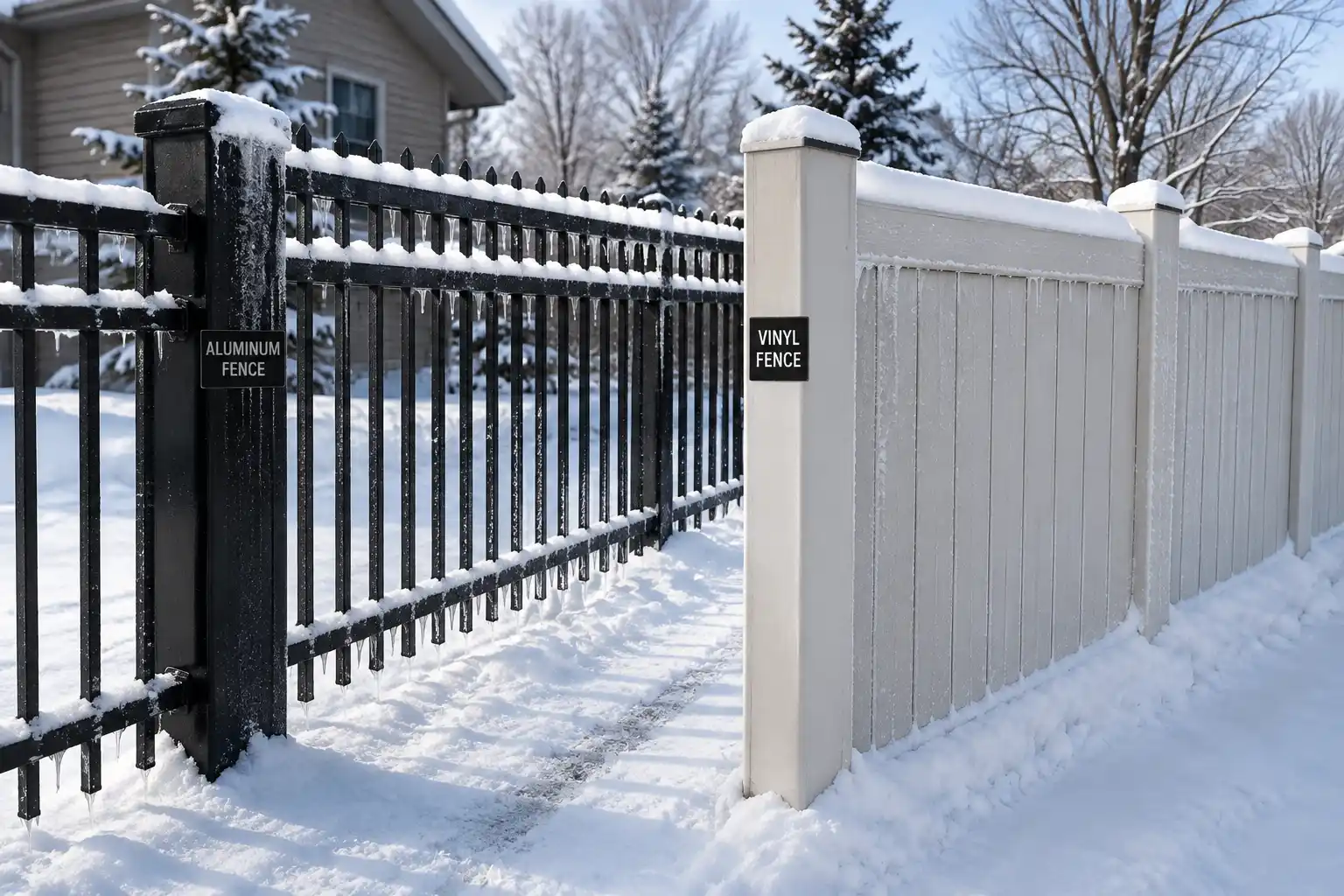
Ontario fences see hot sun, freezing temperatures, snow, ice, wind, rain, road salt in some locations, and repeated freeze-thaw cycles. That makes climate performance one of the first questions in an aluminum fence vs vinyl fence comparison.
Aluminum does not rust the way ferrous metals can. A quality powder-coated finish also creates a durable exterior surface, although scratches, impact damage, cut edges, fasteners, and coating quality still deserve attention.
Vinyl does not rot and does not need staining. Its performance, however, depends heavily on the PVC formulation, wall thickness, reinforcement, post design, panel geometry, and how the system handles expansion and contraction. Two vinyl fences that look similar in a photo may perform very differently on an exposed Ontario property.
Does vinyl fencing crack in winter?
It can, but “vinyl always cracks in winter” is too broad. Cold temperatures can reduce impact tolerance in some PVC products, so product grade and system design matter. Ask the supplier what temperatures the product is designed for, whether posts or gates are reinforced, and what the warranty says about cracking or impact damage.
For aluminum fence vs vinyl fence planning, compare actual specifications rather than assuming every aluminum or vinyl product performs the same.
2. Decide How Much Privacy You Really Need
Privacy is where the aluminum fence vs vinyl fence comparison often becomes clearer.
Traditional aluminum picket fencing keeps sightlines open. That can be an advantage around front yards, landscaped areas, commercial properties, gardens, pools, and places where visibility is part of the safety or design goal.
Vinyl is commonly used in solid or semi-private panel layouts. If the only goal is to block views between neighbouring yards, a full-height vinyl privacy system can be a straightforward option.
Aluminum is not limited to open pickets, though. Modern metal fence panels in Canada can use horizontal or privacy-focused layouts that create much stronger screening while keeping a metal finish and architectural appearance.
Is aluminum fencing good for privacy?
Yes, if you choose a privacy-oriented panel system rather than a traditional open picket fence. In an aluminum fence vs vinyl fence decision, compare the actual panel style, gap size, fence height, and sightline from the areas you want to screen.
A useful test is to stand at the seating area, patio door, driveway, or commercial entrance and identify exactly where privacy is needed. You may not need a solid fence around the entire property.
3. Compare Maintenance and Repairability
Both materials are considered low-maintenance, but they fail and age differently. A useful aluminum fence vs vinyl fence maintenance comparison looks at both cleaning and the cost of restoring a damaged section.
Aluminum usually needs periodic washing with mild soap and water, plus checks around gates, hinges, latches, fasteners, post bases, and damaged coating. If a section is struck by equipment or a vehicle, the repair may involve replacing an individual panel, picket, post, or hardware component depending on the system.
Vinyl also cleans easily. The bigger maintenance question is what happens after damage. With some systems, a cracked rail, post, or panel can be replaced as a component; with others, matching an older colour or profile years later can be difficult.
That is why repair availability belongs in every aluminum fence vs vinyl fence quote review. Ask whether replacement parts are stocked, how long the profile has been manufactured, and whether gates use standard or proprietary hardware.
If you are comparing more than two materials, Alumiguard’s aluminum fence vs wood fence guide adds another useful maintenance benchmark.
4. Look Beyond the Initial Fence Price
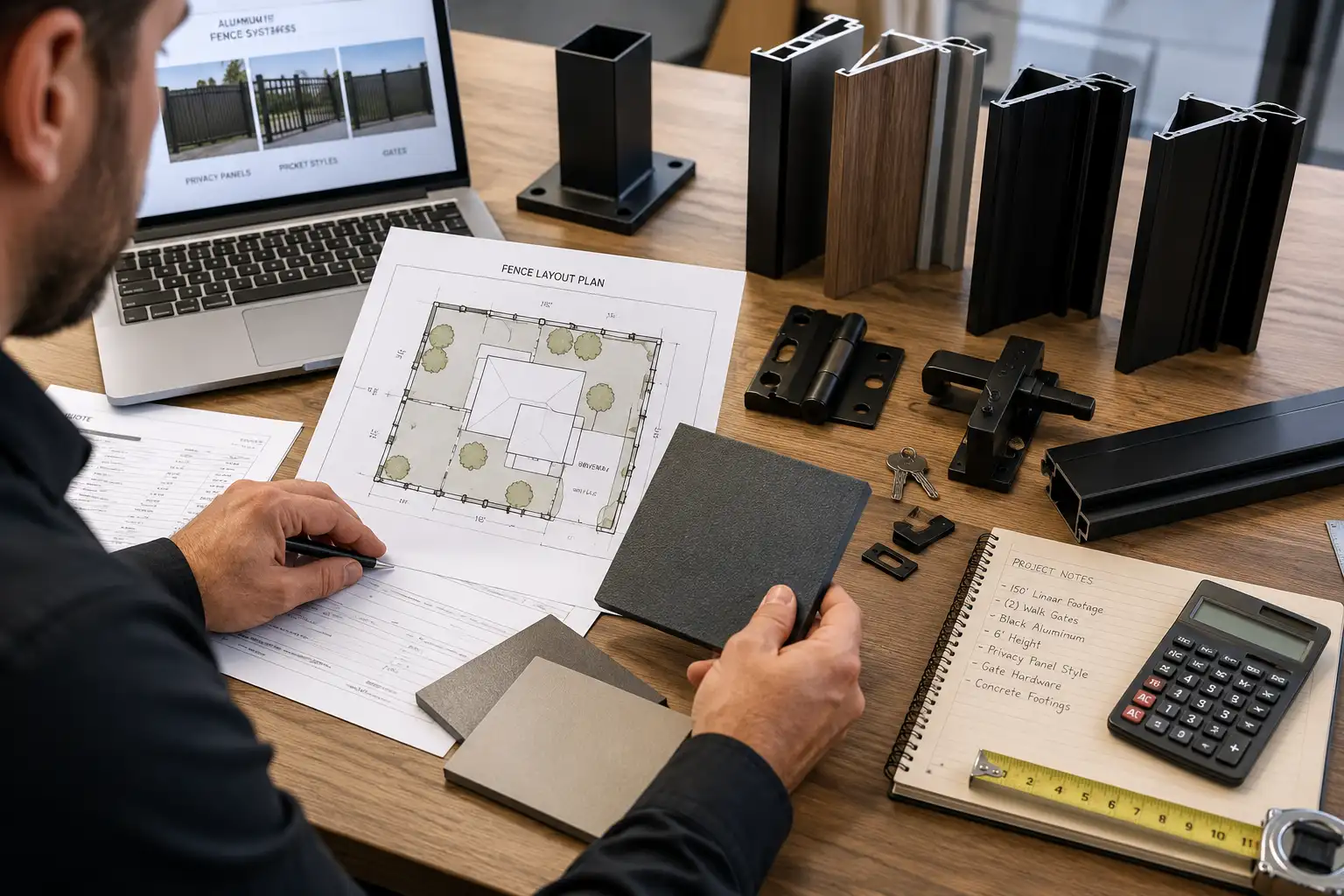
The cheapest material quote is not always the cheapest completed fence.
For aluminum fence vs vinyl fence budgeting, separate the project into materials, posts, gates, hardware, footings, excavation, labour, delivery, site access, disposal, permits or approvals where required, and future repairs.
Consider a 150-linear-foot property with two gates. Even if one panel system is cheaper per foot, the final difference can narrow if the project has difficult grade changes, reinforced gate posts, poor access for equipment, multiple corners, or deeper foundations. A wide double gate can also change the hardware and post requirements more than many owners expect.
Use this checklist when comparing quotes:
- Fence height and total linear footage
- Panel or picket style
- Post size, spacing, and foundation method
- Gate width, quantity, hinges, latches, and reinforcement
- Powder-coat or vinyl finish specifications
- Removal of an existing fence
- Utility locate and excavation requirements
- Slope, retaining walls, concrete, and drainage conditions
- Delivery, staging, and access
- Warranty coverage and replacement-part availability
The best aluminum fence vs vinyl fence quote is the one that describes the complete system, not just a price per foot.
5. Match the Fence to the Site and Installation Method
A strong fence can still perform poorly if the posts, footings, or layout do not suit the site.
Ontario properties may include clay soils, fill, slopes, retaining walls, concrete edges, narrow side yards, tree roots, and buried utilities. Before digging post holes, Ontario property owners and contractors should follow Ontario One Call’s locate process so underground infrastructure is identified before excavation begins.
Alumiguard’s guide to aluminum fence installation in Toronto is also useful for understanding layout, posts, alignment, gates, and installation planning.
Can aluminum or vinyl fencing work on a sloped lot?
Usually, yes, but the design approach matters. Some systems rack to follow a slope, while others step panel by panel. Stepping can create larger triangular gaps at the bottom, which may matter for pets, privacy, pool areas, and appearance.
For an aluminum fence vs vinyl fence comparison on a sloped property, ask the supplier to show how the exact panel system handles grade before ordering material.
6. Compare Gates, Security, and Daily Use
Gates are often the hardest-working part of a fence.
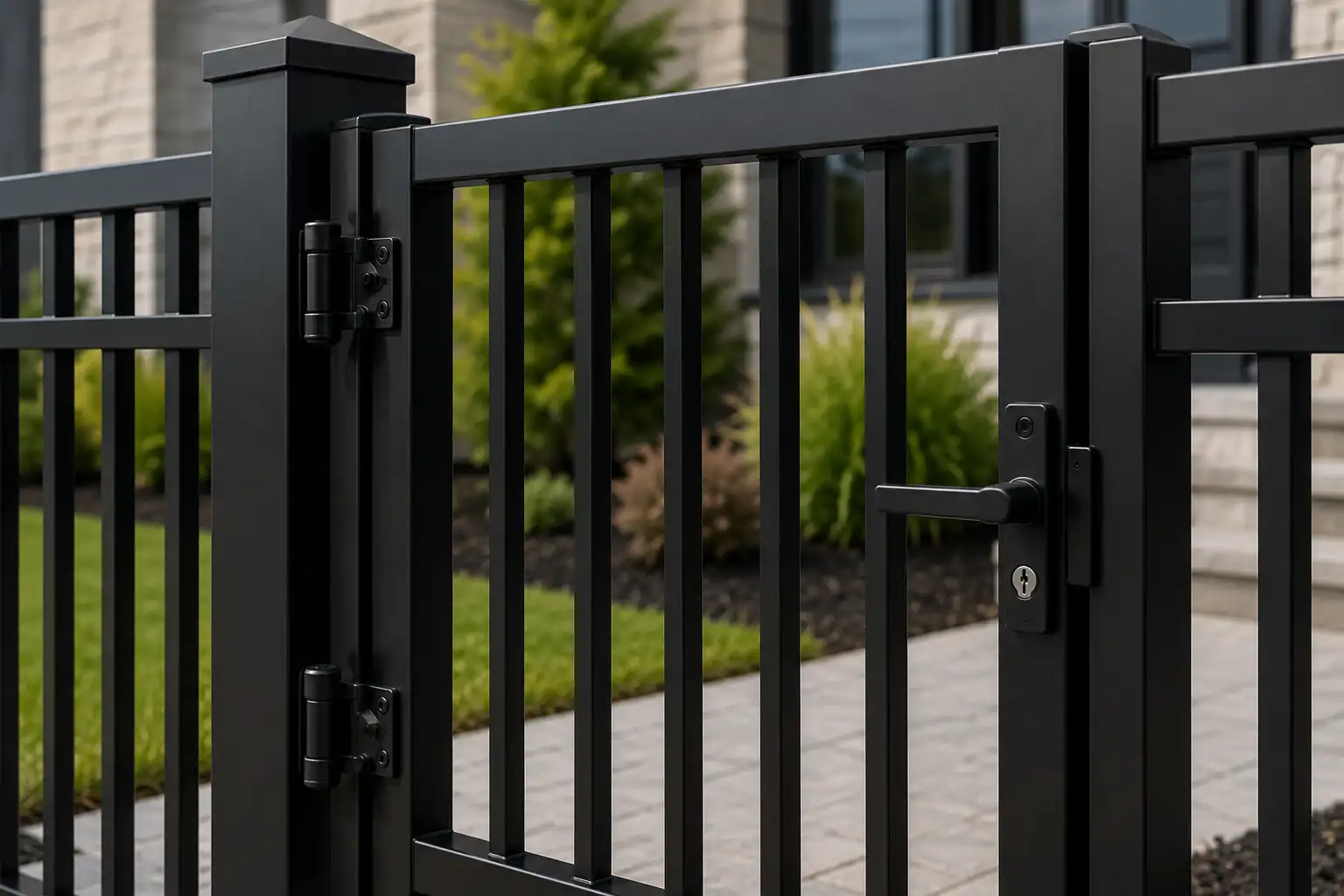
A residential side gate may open several times a day. A multi-unit, commercial, or industrial gate may see far more cycles, heavier hardware, delivery traffic, snow clearing, and occasional impact. That means the aluminum fence vs vinyl fence decision should include gate construction, not treat the gate as an accessory added at the end.
Aluminum is well suited to fabricated gate frames and can integrate with a wide range of hinges, latches, closers, and access-control hardware. Vinyl gates can also work well, but larger openings may require internal reinforcement so the gate maintains alignment.
Ask five questions before approving a gate:
- What reinforces the gate frame?
- What supports the hinge post?
- Is the latch adjustable?
- Can hinges and latches be replaced without replacing the gate?
- How will snow, frost movement, and grade affect clearance?
If a property needs frequent gate use, these answers may matter more than a small difference in panel price.
7. Check Local Fence Rules Before You Order
Fence material is only one part of compliance.
Toronto’s current Fence Bylaw guidance explains that maximum heights and other rules vary by property type, fence location, driveway visibility, and whether the fence encloses a pool. Other Ontario municipalities have their own bylaws, so do not assume a Toronto rule applies everywhere in the GTA.
Pool projects deserve extra attention. Alumiguard’s Toronto pool fence requirements guide covers height, gates, enclosure planning, and permit considerations in more detail.
That means an aluminum fence vs vinyl fence choice should happen after you understand the required height, openness, gate operation, and location. A privacy panel that works perfectly in a backyard may not be appropriate in a visibility-sensitive area near a driveway.
Aluminum Fence vs Vinyl Fence Comparison Table
| Factor | Aluminum fencing | Vinyl fencing | What to confirm before buying |
|---|---|---|---|
| Privacy | Open pickets or privacy-panel options | Commonly available as solid privacy panels | Exact panel gaps and permitted height |
| Maintenance | Wash periodically; inspect coating and hardware | Wash periodically; inspect panels, posts, and gates | Cleaning guidance and warranty exclusions |
| Cold-weather performance | Metal performance remains predictable; coating, fasteners, and thermal movement still matter | Performance varies by PVC formulation and reinforcement | Rated service conditions and impact warranty |
| Gates | Strong fit for fabricated frames and replaceable hardware | Can work well with proper reinforcement | Gate-frame construction and hinge-post support |
| Repairs | Individual components may be replaceable | Component replacement depends on system availability | Long-term parts availability |
| Appearance | Modern, ornamental, open, or privacy-focused | Clean, uniform, often privacy-focused | Colour, texture, fading coverage, and style |
| Sustainability | Aluminum can be recycled repeatedly | Recycling options for PVC vary by program and product | Local end-of-life options |
| Best fit | Visibility, architecture, gates, low maintenance, custom layouts | Privacy-first layouts and simple panel runs | Site-specific priorities and total installed cost |
If material circularity matters to your project, the Aluminum Association’s recycling overview explains why aluminum can be repeatedly recycled without the underlying metal losing its fundamental properties.
Aluminum Fence vs Vinyl Fence: Which One Is Better for Your Project?
Use the aluminum fence vs vinyl fence comparison as a decision tree.
Choose aluminum when:
- You want open sightlines or a modern metal privacy system.
- The project includes multiple or heavily used gates.
- Matching a modern building, black windows, railings, or other metalwork matters.
- You value replaceable metal components and long-term parts support.
- You need a manufacturer that can support contractor, builder, developer, or wholesale quantities.
Choose vinyl when:
- Solid privacy is the dominant goal.
- You prefer the visual character of a PVC panel system.
- The selected product has clear cold-weather, wind, and warranty specifications for your site.
- The project is a relatively straightforward panel layout with compatible gate reinforcement.
Choose neither until the site is measured if the property has a steep slope, retaining walls, uncertain boundaries, buried services, complex gates, or unusual wind exposure. Those conditions can change the best system.
The right aluminum fence vs vinyl fence answer comes from matching the product to the property, not from choosing a material in isolation. That is the most reliable way to make an aluminum fence vs vinyl fence decision that still makes sense years after installation.
Common Mistakes to Avoid
The first mistake is comparing only panel prices. Posts, gates, hardware, excavation, delivery, and labour can change the final budget substantially.
The second is ordering before confirming fence rules and property conditions. An aluminum fence vs vinyl fence decision can be technically sound and still fail if the planned height, location, or gate arrangement does not meet local requirements.
The third is treating all products in one material category as equal. Profile thickness, reinforcement, coating, fasteners, gate frames, and manufacturer support can make two “aluminum fences” or two “vinyl fences” very different systems.
The fourth is ignoring replacement parts. Ask what happens five or ten years later if a delivery vehicle damages one panel or a gate hinge wears out.
Plan Your Aluminum Fencing Project With Alumiguard MFG
If your aluminum fence vs vinyl fence comparison is pointing toward aluminum, the next step is to match the fence style, panel layout, gates, finish, and quantity to the project.
Alumiguard MFG manufactures and supplies aluminum fencing for contractors, builders, developers, wholesalers, and larger project requirements. Options include aluminum privacy fencing, fences and gates, black aluminum fencing, metal fence panels, and customizable systems.
For specifications, bulk-order questions, or help selecting a suitable aluminum fence system, contact Alumiguard MFG to discuss the project before materials are ordered.