Toronto pool fence requirements catch many homeowners off guard because the fence is usually treated like the last step in the project, when in reality it affects the layout, the permit process, the gate hardware, and even how the house relates to the pool area.
If you are planning a new backyard pool, replacing an old enclosure, or trying to figure out whether your current setup is compliant, it helps to understand the rules before you buy panels, posts, or gates. Toronto does not treat a pool fence like a casual yard fence. It is a safety enclosure with specific requirements for height, openings, visibility, latch placement, and how access to the pool is controlled.
That is exactly why this guide focuses on Toronto pool fence requirements from a homeowner point of view. It is not a sales pitch disguised as a code article. It is a practical breakdown of what matters, what people often miss, and how to think about materials such as aluminum fences or glass railings when the goal is a safer and cleaner-looking pool area.
Why Toronto pool fence requirements matter before you start building
The biggest mistake homeowners make is assuming they can build the pool first and sort out the enclosure later. Toronto does not approach it that way.
If your outdoor pool, hot tub, whirlpool, pond, or similar structure can hold water deeper than 600 mm, the City expects you to deal with the enclosure rules as part of the project planning process. In practical terms, that means the fence is not optional decoration. It is part of the safety system around the pool.
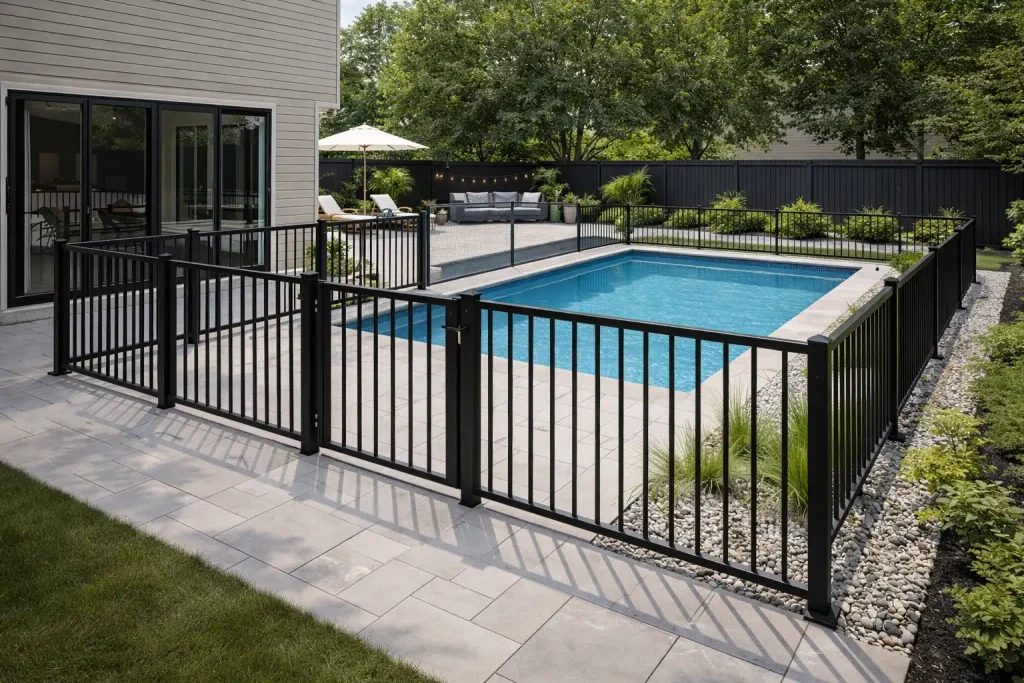
The City also requires a four-sided enclosure concept. That point matters because many homeowners assume the house can count as one side of the enclosure with a back door opening right into the pool area. Toronto’s rules are more restrictive than that. The pool area must be fully enclosed in a way that controls direct access, which is why layout planning matters just as much as fence style. You can see the City’s overview on the Fences page, and if you want the permit sequence itself, Toronto also has a dedicated Pool Fence Enclosures guide.
For homeowners already comparing product styles, this is where design and compliance need to meet. A sleek enclosure still has to work as a legal enclosure.
What counts as a pool under Toronto pool fence requirements?
This is one of the first questions homeowners ask, and it is an important one.
Toronto’s rules do not apply only to large in-ground swimming pools. They apply to outdoor structures capable of being used for swimming, wading, or bathing where the water depth can exceed 600 mm. That can include some inflatable pools, above-ground pools, and certain hot tub or spa setups. The exception many people ask about is a hot tub or spa with a permanently attached, lockable cover. In that case, a separate enclosure may not be required.
That means you should not assume a smaller backyard water feature escapes the rules just because it is not a traditional pool. If the water depth crosses the threshold, the safest move is to check the bylaw before you build.
Toronto pool fence requirements start with permits, not panels
Before talking about height or gate hardware, it helps to understand the permit sequence.
Toronto’s process starts with a Zoning Certificate. After that, homeowners apply for a Pool Fence Enclosure Permit. The City’s guidance is very clear that the pool cannot be constructed and filled with water without the required enclosure process being completed. The permit package also expects documentation that shows the location, height, and material of the proposed fence and gate.
This matters because the fence design is not just a late-stage contractor decision. It should be part of your site plan from the beginning.
If you are still early in planning and comparing systems, Alumiguard’s services page is useful for understanding the broader range of railing and fence solutions available, while the About page gives helpful background on the company’s in-house manufacturing and code-conscious approach.
Toronto pool fence requirements for height, placement, and climb resistance
Most homeowners search for one number, but Toronto pool fence requirements are really a combination of measurements working together.
For a single residential property, the minimum enclosure height is 1.2 metres. For multiple residential and non-residential properties, the minimum is 1.8 metres. The enclosure also has to sit at least 1.2 metres horizontally from the water’s edge.
That is only the start.
The enclosure must also be at least 1 metre away from anything outside the fence that could help someone climb it, such as a tree, furniture, or another object. The code also limits climbable elements between 100 mm and 1.2 metres above grade on the outside face of the enclosure. In other words, even a fence that is technically tall enough can still fail the intent of the bylaw if nearby conditions make it easy to scale.
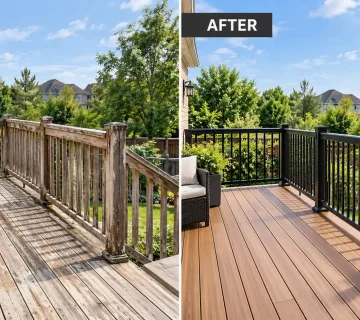
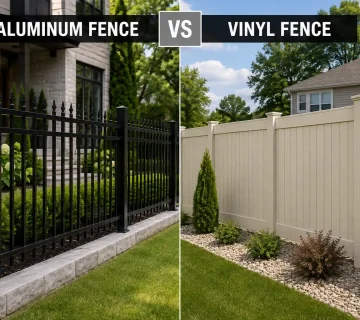
This is one reason material choice matters. A properly designed aluminum picket system can create a clean, durable barrier without the maintenance issues that often come with wood. If you are weighing style and long-term upkeep together, Alumiguard’s post on Why Aluminum Fence is the Best For Your Property gives useful context on why so many homeowners lean toward aluminum for outdoor enclosures.
Toronto pool fence requirements for gates are stricter than most people expect
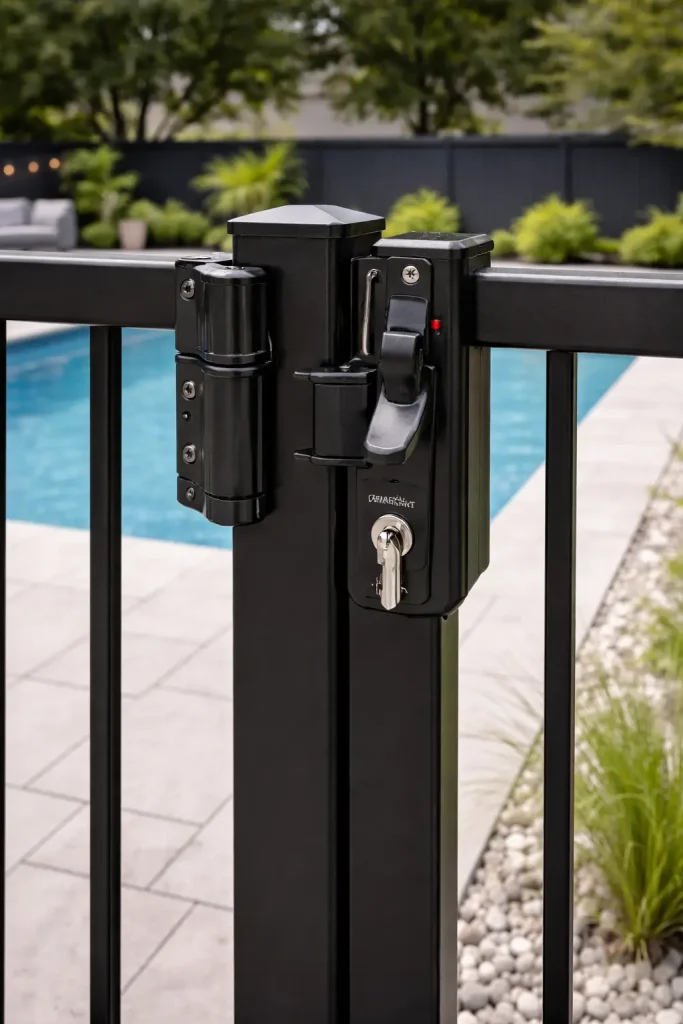
If there is one area where homeowners tend to fail inspection, it is the gate.
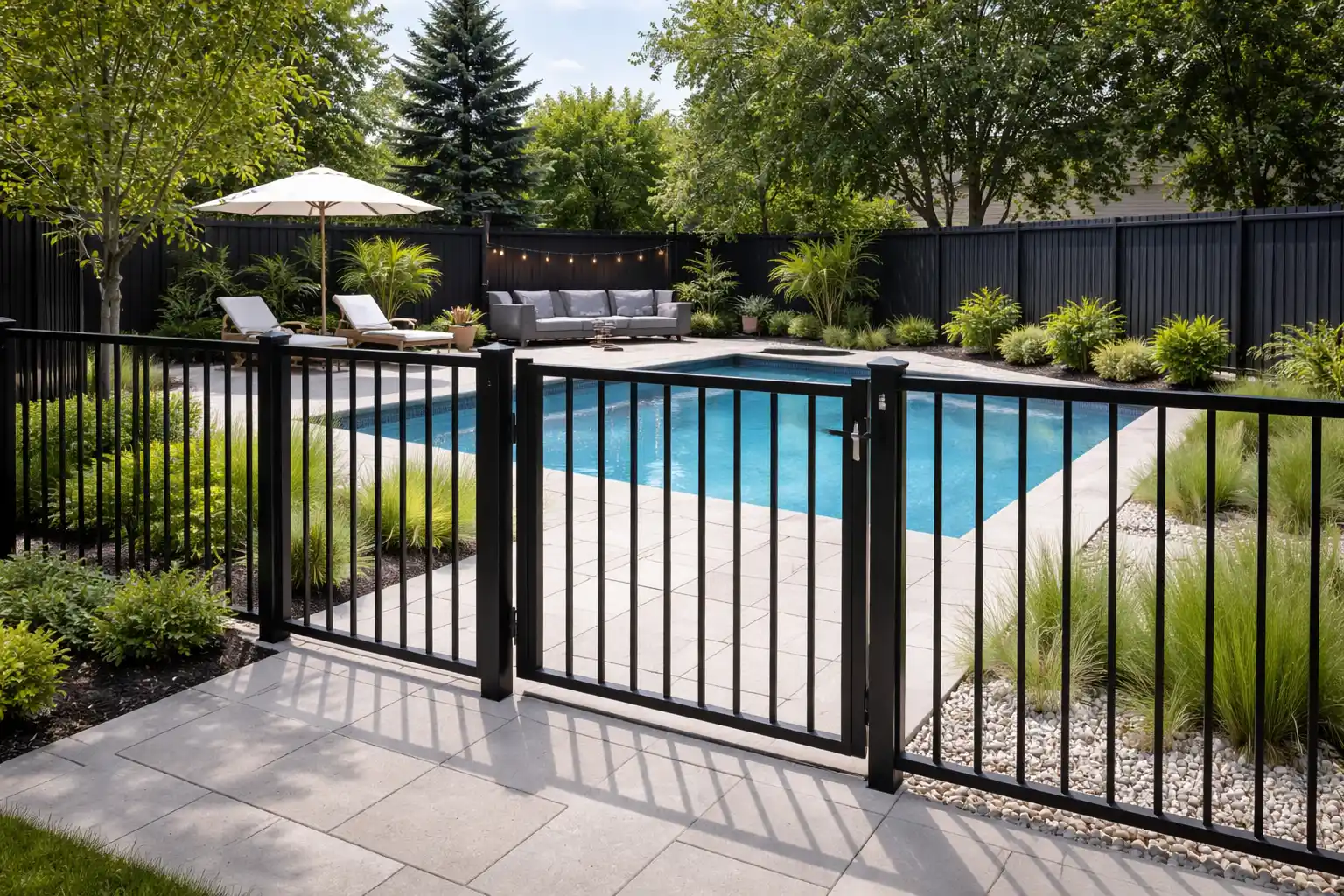
Under Toronto pool fence requirements, the gate is not just another matching panel with a latch. It has to be supported on substantial hinges, and a single gate must be self-closing and equipped with a lockable, self-latching device. That latch has to be located on the inside near the top of the gate or on the outside at least 1.5 metres above grade. The gate must also be kept locked except when the pool area is in use.
Double gates bring another layer of requirements. One side must be self-closing and self-latching, and the second gate must have a lockable drop bolt that extends down into concrete, asphalt, or paving stones by at least 25 millimetres.
This is where homeowners often underestimate the hardware side of the project. The fence panels may look right, but the gate closer, latch placement, and locking setup are what determine whether the enclosure actually functions the way the bylaw expects. Alumiguard’s exterior aluminum railings page even notes the importance of a self-closing lock option for pool-adjacent outdoor applications, which is a helpful bridge between product planning and compliance thinking.
Can the house count as one side of the pool enclosure?
This is one of the most common questions homeowners ask, and it is where Toronto pool fence requirements become more specific than many people expect.
Toronto requires the pool area to be fully enclosed. The City’s examples make it clear that a rear door opening directly into the pool area is not considered a permitted enclosure arrangement. Instead, the pool has to be isolated with a compliant enclosure so there is no direct open path from the house into the pool area.
There is also a visibility rule that people often miss. Where the section of fence separates the pool from the residential building on the same property, that section has to be open construction, such as chain-link or another equivalent open fence, so the pool can still be seen from the main living area where there is a line of sight.
That matters for material selection. A fully opaque privacy solution may not belong in the section between the house and the pool if it blocks required visibility. Homeowners who want a cleaner visual look sometimes start exploring lighter, more open systems or even carefully planned glass sections. If you are considering a transparent approach for certain parts of the pool area, Alumiguard’s article on Glass Railings for Pool Areas is a useful design reference. Just remember that style has to sit inside the Toronto rules, not replace them.
What fence materials are allowed for a Toronto pool enclosure?
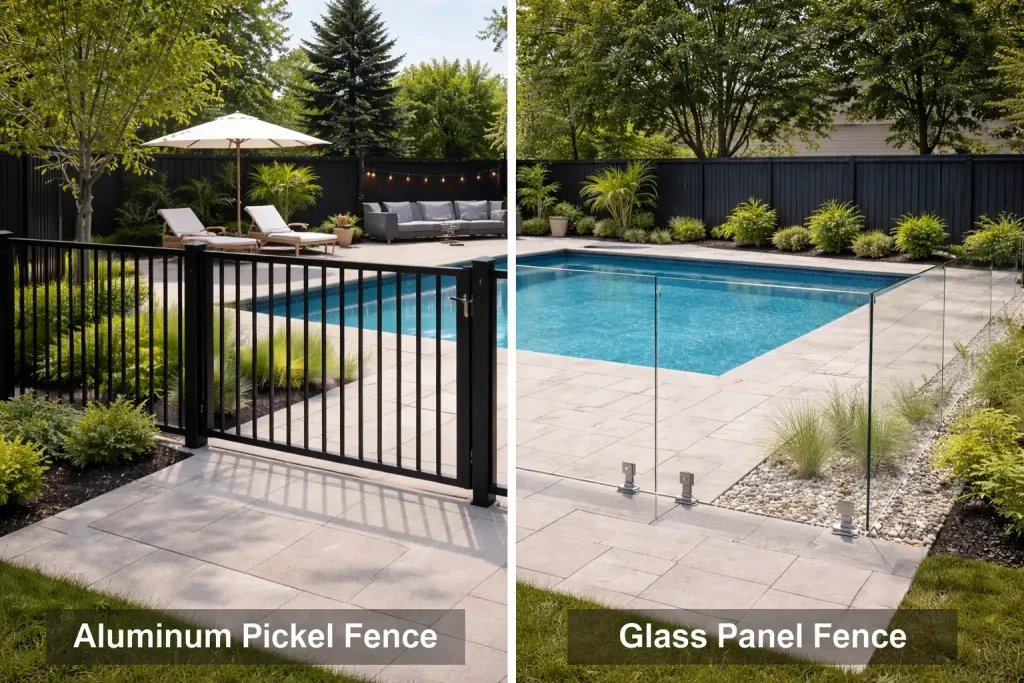
Toronto’s bylaw does not limit you to one fence type. The City identifies several permitted enclosure types, including chain-link, wood, metal picket fencing, glass panel fencing, and masonry walls, as long as the relevant construction standards are met.
That is good news because it gives homeowners flexibility. The more important question is not only “What looks best?” but also “What will stay reliable outdoors and work with the rule set?”
For many Toronto homeowners, aluminum is attractive because it gives a clean appearance, resists rust, and works well with self-closing gate hardware. If you are comparing materials at a broader level, Alumiguard’s older comparison article on Aluminum Fence vs Wood Fence is still useful for thinking through maintenance, durability, and long-term ownership.
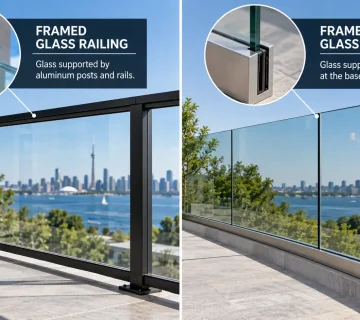
Glass can also work, especially in modern backyards where keeping the sightline open is a major design goal. But glass needs to be treated as an enclosure component, not just a visual feature. Panel spacing, support, and gate details still need to comply with the pool enclosure rules.
Common Toronto pool fence requirements mistakes homeowners make
The most expensive errors are usually not dramatic ones. They are small assumptions made too early.
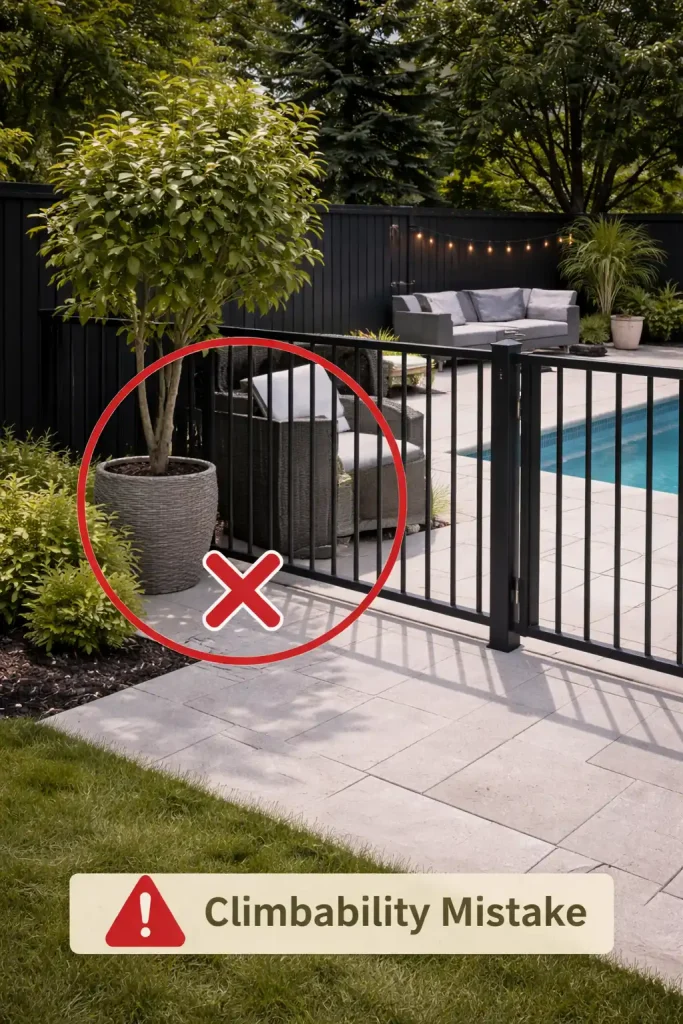
One common mistake is choosing a standard yard gate and assuming a closer can be added later. Another is laying out the pool first and discovering that the required fence setback or gate swing creates awkward circulation. A third is forgetting that a nearby bench, planter, retaining feature, or tree can turn a technically compliant fence into a climbable one.
Another frequent mistake is mixing up general fence-height rules with pool enclosure rules. That confusion is easy to make, especially if you are also thinking about boundary fencing on the rest of the property. If that issue is on your radar, Alumiguard’s post on Does Lattice Count as Fence Height in Toronto? is helpful for understanding how decorative additions can affect height calculations in other fence situations.
The larger point is simple: a pool fence should be treated as a code-driven safety system first, and a design feature second.
How Toronto pool fence requirements affect your layout decisions
Toronto pool fence requirements do more than decide the fence height. They influence how you plan movement through the backyard.
Think about where people will enter the pool area, how the gate will swing, where furniture will sit, how children move through the yard, and whether the fence line interferes with a deck, patio, or equipment pad. A rushed layout can leave you with a technically legal enclosure that feels awkward every day.
This is also why it makes sense to plan the pool enclosure together with the surrounding exterior elements. If your project also includes deck guards, steps, or patio edges, matching the enclosure with nearby glass railings or exterior aluminum railings can create a much more intentional result instead of a patchwork backyard.
Should you choose aluminum or glass for a Toronto pool fence?
There is no single answer, but there is a smart way to think about it.
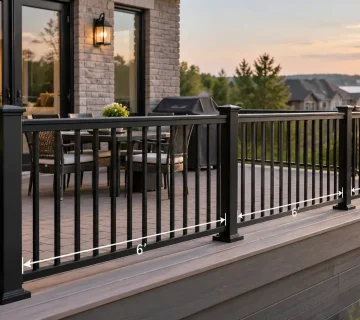
Choose aluminum when you want a strong, low-maintenance enclosure with a classic security profile and straightforward gate integration. It is especially practical for homeowners who want a durable perimeter that holds up well in Toronto weather and works naturally with code-oriented pool gate hardware.
Choose glass when preserving the view is the priority and you are designing a more modern, open backyard. Glass can be a great fit around a pool, but only when the full system, including posts, panels, gates, spacing, and visibility rules, is planned properly.
If you are looking at inspiration by area, Alumiguard also has location-focused pages for glass and picket railings in Toronto, glass and picket railings in Mississauga, and glass and picket railings in the GTA, which can help you think through what fits the wider exterior style of the property.
What homeowners should do before ordering a Toronto pool fence
Before ordering anything, confirm five things:
First, confirm that the project actually falls under the pool enclosure rules based on water depth and use.
Second, map the enclosure line with the house, deck, patio, pool equipment, and any nearby climbable objects in mind.
Third, confirm whether the section between the house and pool must stay visually open.
Fourth, choose the gate hardware at the same time as the fence system, not after.
Fifth, make sure the permit and inspection sequence is clear before installation starts.
Those steps sound simple, but they prevent most of the delays and redesigns homeowners run into with Toronto pool fence requirements.
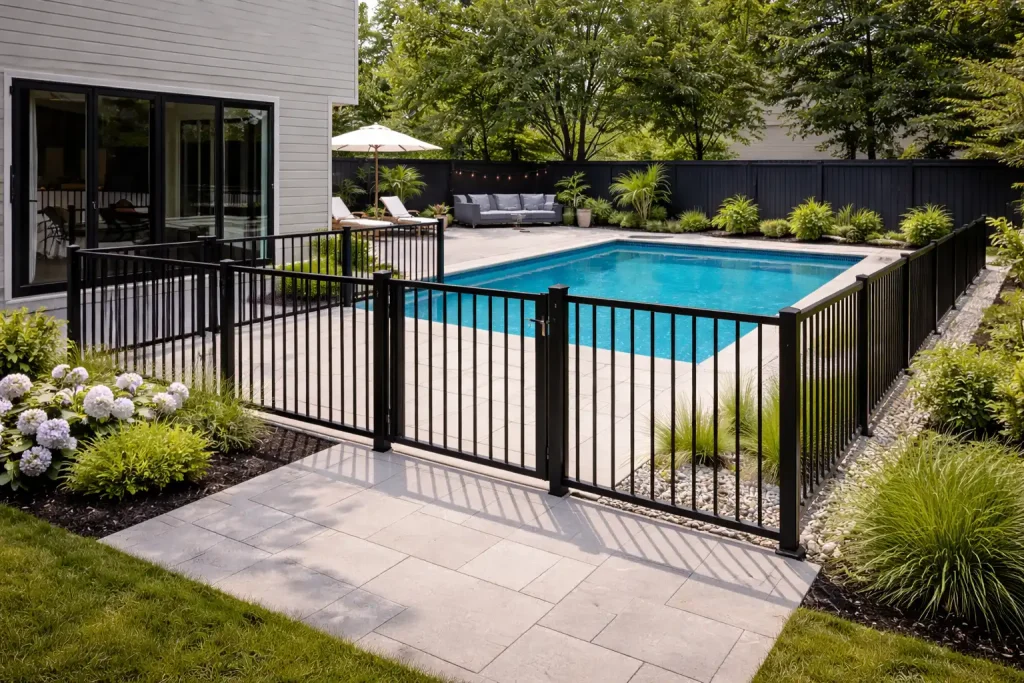
Bringing Toronto pool fence requirements back to the right product choice
The best pool fence is not just the one that looks good in the showroom. It is the one that fits your property layout, supports the right gate hardware, and helps you meet Toronto pool fence requirements without turning the backyard into a maintenance project.
That is where Alumiguard MFG fits naturally into the conversation. The company already offers aluminum fences, glass railings, and exterior aluminum railings that align well with the kind of outdoor safety and design decisions homeowners make around pools, decks, gates, and backyard circulation. If you want to understand the broader product range first, the services page and About page are the best starting points.
And if your next step is no longer research but planning a real enclosure, the simplest move is to contact Alumiguard MFG and discuss your pool layout, preferred material, and gate requirements before the project gets locked into the wrong design.
Toronto pool fence requirements are much easier to handle when the fence is planned early, the gate is chosen properly, and the enclosure is treated as part of the whole outdoor space rather than an afterthought.